Spotlight Series
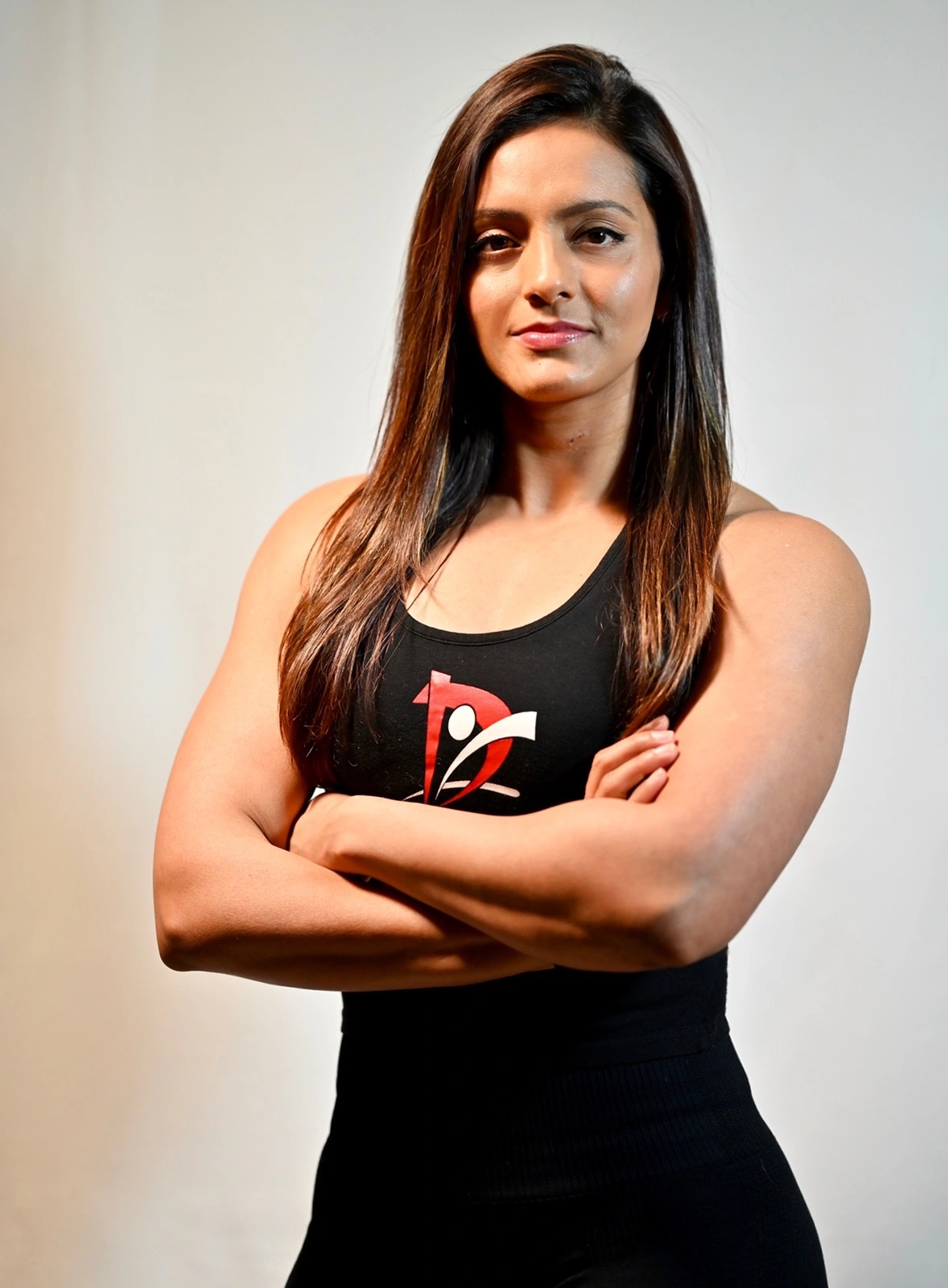
Topic: Professional Spotlight: Diana Paul: Moving beyond “good enough” to high – performance.
Guest Name: Diana Paul
Guest Credentials: Personal Trainer and Owner of D Fitness Lab
Discussion Details:
At D Fitness Lab specializes in the Science of Comeback! If you’ve finished rehab but still don’t feel like yourself, this conversation is for you. D Fitness Lab bridges the gap between healing and high performance.
Benefits of Watching:
The Diana Paul Experience: A look at her unique coaching philosophy that turns intimidation into inspiration.
A culture of Psychological Safety: How her approach ensures every client feels secure, supported and confident in their movements.
The Power of Small Group Training: The benefits of training in an intimate 6-8 person setting that balances community energy with individual attention.
Core and Floor Integration: Specialized insight into combining pelvic floor health with traditional weight training for a functional foundation.
Address of Guests’ Business:
D Fitness Lab
21720 Red Rum Dr. #172
Ashburn, VA 20147
Nice to meet you. Finally, we do.
I know. So just a little intro about Diana. Diana is a certified personal trainer with specialties in sports psychology, exercise nutrition, pelvic floor specialist, which I want to know more about, rotational movement specialist, and she holds a Masters in Genetics, and is a Landmine University Level 2 coach. And she actually started her business in a one-car garage, and now has built it up to a 6,000 square foot facility. So, congratulations to you.
Thank you so much.
And she created D Fitness Lab to fill the gap in the fitness world to bridge post-rehab or physical therapy to more fitness movement for everyday life. So, that’s fabulous, Diana. I’m so excited to talk to you today. So talk to me a little bit about what is one misconception about what you do?
Oh. Interesting. Yeah, so I know my facility is a training facility, and a lot of people think that it’s a gym. And every time a person hears the word gym, they always think, okay, they assume that it is all about working out, and it’s all about aesthetics, and they just want to keep pushing harder and harder whenever they are working out. So, that’s the biggest misconception that I see when I portray myself as a personal trainer, and because I believe that, for me, fitness is not just working out. Fitness has so many other aspects. So, which is why I try to call myself a strength coach or strength and fitness coach, in which I help people bridge the gap between rehab or anyone coming from with an injury or recovering from an injury or any kind of chronic pain, and helping them get into strength training safely. Because I’m trying to help them rebuild themselves and try to be more confident in their movements, rather than just trying to work out hard and then keep getting hurt every time.
Mm-hmm. Yeah. Yeah. You’re looking for long-term performance.
Yes.
Viraj Chang: You’re looking for more functional goals for every, like, like they want to get back to continue hiking or they like to continue traveling.
Yeah.
Those long-term things that they need to work on.
Yeah. More sustainability.
Yeah.
Yes.
Healthy, and then in this world now, menopause and perimenopause, just staying strong in their bones and their muscles for their future as well. Right?
Yeah.
I’m sure you come across a lot of that with the females.
Oh, yeah. I’m really happy that now a lot of women are actually coming forward, and they are understanding what is strength training and how good it is for them.
Mm-hmm.
Because the first thing, what another misconception is for women, that they think that as soon as they do strength training, they’re going to look like a man.
Mm-hmm.
And or they’re going to look really bulky. Again, and that is what affects them mentally so much that they get scared of lifting heavy.
Right.
They lift even five pounds, and they think that, “Oh my God, my arms are going to look like you, Diana. No, I don’t want my arms to look like you.”
Well, I would kind of love my arms to look like you.
And I have got those comments. But again, and this is what I try to make all the women, specifically women, understand that how good and how beneficial strength training is for them. And not just because it’s going to help them for bone health or during, like you said, perimenopause or menopause, but it’s going to just build up so much confidence in them to move better.
Mm-hmm.
And they’re going to see themselves completely differently. And once they understand the difference between just strength training and bodybuilding-
Mm-hmm
.. then it will be a completely different, I would say, a scenario for them, which is going to make them feel like a completely different person.
Yeah. Yeah.
So-
Viraj Chang: And you probably love seeing that transition, right? That transformation, too.
Yeah.
That mind shift is unreal.
Yeah. It is amazing to see, especially when I see that in women. And I have seen now recently, I just signed up seven new women for pelvic floor-
Mm-hmm
… premenopause, menopause, and they are coming out of injury, and they all were so scared and so intimidated to enter inside the gym, and they’re like, “Oh, no. Are we in the right spot? Am I supposed to be here?” And my primary goal always is whenever a client enters, I want to make them feel comfortable, and if I can achieve that, then my goal is achieved. And once I see that, I see how the mind shifts just from a training perspective and just during assessment itself, that they understand the benefits of strength training, and they know how much this is going to help them. And the only one statement I always use with all of my clients who always get intimidated is the hardest and the heaviest weight that you have lifted is the front door. So I always say to all of my clients, with especially new clients, whenever they come in and the first thing they say, “I’m really lazy, and I’m really intimidated. This is my first time I’m strength training. I have never done this before. How you can help me? I’m not going to show up. I know how I am. How you can help me with consistency? And what is going to happen if I actually become consistent? Then how I might look like? What about aesthetics?” All of that. And intimidation is very common to everyone. It doesn’t have to be women. Everyone, whoever enters the training facility. And that’s why I always tell them, “The heaviest weight you have moved, you have lifted is the front door, and if you can pass through that, then leave everything on your trainer, okay? You just have to show up.”
Yeah. I love that. I love that.
You leave everything on us. Just show up and rest is on all us.
Oh, that’s a great feeling, and I love that motto. So-
Yeah
… I appreciate that, and I think a lot of people who are leaving physical therapy to have that warmth and that safety-
Yeah
… when they enter your space, I think is really, really important. So-
Yeah
… what kind of led you to your specialty, and just being a personal trainer, and what kind of led you into this field?
This is a very long story.
Okay.
What actually got me into this, and you saw my background is in medical genetics, and-
Yeah
… I was working as a genetic counselor in India. And with genetic counseling, I was also working as a clinical research scientist, too, in a hospital. And I was working with a lot of clients, or I should say patients in hospitals, who were cardiac patients, and they were going through stem cell research in which the stem cells were extracted, autologous from their bone marrow, and it was injected into their heart through the vein or through, directly into the heart. So-
Mm
… and just to see if stem cell is actually helping in their health as well as their cardiac health, which said, did not do anything. Stem cell did not do anything. So we did have, it was a randomized trial, and we did have a placebo arm in which you were just changing the lifestyle and just giving medications, regular medications, and just helping them with proper nutrition and proper medication, and helping them make some lifestyle changes. Whereas, stem cell research, yeah, so there was a big difference between stem cell research arm, as well as lifestyle changes. So I saw so much improvement in patients who just had lifestyle changes, and I was like, “If I can just control this-
Mm-hmm
… I can change lives.”
Mm.
“I don’t even have to let them move from here into research.”
Mm-hmm.
Right? And that was the time when I actually saw that how much medicine is being marketed.
Mm-hmm.
And people are relying on so many pills and so much medication, and they just want to get better without working hard and without a sustainable lifestyle. They just want to have a quick fix, which should just help them with pain, with all the health issues that they are going through, cholesterol, high blood pressure, and diabetes, the most common one. And that is what was, so, it was really sad to see that how much people just relied and relied on medication, and how much doctors, surgeons, all them, reinforced, “Okay, this is it. This is the path, and this is what you should be doing.”
Mm.
But whereas if I can make change over here, and I can help them where they are right now, and just getting better around that, I can stop them from doing all the medication, the surgeries, and just relying on cortisone shots-
Mm
… or something like that. So that was one of the biggest challenge for me to transition from a clinical research scientist and getting into a completely new field, which was personal training.
Yeah.
And when I helped only one, my first client, and I saw that she responded so well to the training, and that was my eye opening, was the turning point when she said, “Oh my God, Diana, I feel like myself.” And that is when I realized that I’m actually rebuilding themselves. I am not changing anything. I’m just helping them to feel confident, to feel that they’re moving better. And, that is when I was like, “Oh, I’m doing something bigger than just fitness.” This is not just workouts. This is not just fitness. This is something more than fitness.
Yeah.
Yeah. So that is when I was like, “Okay, this is what I’m going to do. This is what helps, and this is going to help people long-term.”
Yes. Yes.
Yeah.
And, I’m sure you feel so good at the end of the day because you’re seeing so many shifts and changes. And for that person to feel those shifts and changes in their life and experience them, and do all the things that they want to do and age so well, that’s a gift in itself. So I think you are completely correct. You’re giving them almost, you’re changing the trajectory of their life, right?
Yeah.
And so, yeah. So that’s amazing. So what values guide the way you serve your customers and your community?
The primary one, when I became a trainer, my value was technique over ego-
Mm-hmm
… and I still say it. I always say, if I am coaching with intention, I want you all to train with intention. Train with intent. If I don’t see you training with intent, no, we are not just here doing repetitions.
Mm.
Then this is not the right gym for you, not right training for you. You can, I don’t want to say it, but yeah, you can go to CrossFit gym and just keep repping it out, repping all those reps. And then, you’re going to hurt yourself. So primary, core value is always technique over ego. And I always say how much, whenever a person comes to me, I want to meet them where they are, because I don’t want to be like, “Okay, you know what? I’m going to push you so much and I’m going to help you in the next workout that you’re going to feel like a whole new different person.” No, I’m not going to do that.
Mm.
I don’t want you to be sore the next day. I’m not going to make you go under a barbell and start making you do back squats right away. I’m not going to make you do heavy deadlifts right away. If I can see so many imbalances right now during my assessment in you, no, I’m not going to do that for you. What I’m going to do is I’m going to meet you where you are right now. I’m going to build your foundation first, teach you the basics. Work on your technique, see what is bothering you, and which movement are really good for you, and which movements are actually not really good for you.
Mm-hmm.
Because one size doesn’t fit all.
Mm-hmm.
And then I’m going to help you progress from there.
Okay.
Those are the main two core values which I really work with. And the other one is that because I want to build strength for my clients, not just to feel strong, but to actually support their real life. Okay? I want them to support their real life. I want them to support their daily activities, day-to-day activities. I don’t want them to be having pain just from going to the bathroom.
Mm-hmm.
Sitting up and going up and down the stairs. Okay? Picking up your groceries. These are the most common ones which we hear every day that, “Oh, I threw my back out because of this. Because I just sneezed, and I threw my back out.” And how did that happen? Just because you have been not doing so many things that you’re supposed to do for your spine, and you have been just getting weaker and weaker day by day, and your daily activities are suffering. And then you are suffering, too, from all the pain that you’re going through.
Mm-hmm.
Yeah. So those are my main core values, which I work on. I do also say one more, which I love it, and it is aesthetics over capability.
Okay.
How much… Sorry, I should say capability over aesthetics, and how much-
Yes
… capability is way more important than your aesthetics.
Mm-hmm.
I always say aesthetics always comes with bonus.
Mm-hmm.
Right? Once I’m improving you in your capability of being able to push that heavy sled-
Mm-hmm
… and you are able to do that without getting hurt, without feeling pain, and you feel strong about what you just did, and you start seeing aesthetics changes start happening naturally, because you also get into a mindset that, “Okay. I’ve been working so hard. Now I want to improve myself in nutrition.” Okay? “And I want to actually not ruin all the work that I have done, all the hard work that I’ve done in the gym. I want to live my life the same way, that disciplined life, same way even outside the gym.”
Mm-hmm.
Right? And then you want to complement the workout that you just did.
Mm-hmm.
So people end up changing their lives naturally when they start seeing progress in the gym. They’re like, “Okay, now I want to be better even in the house, too. What do I do? Well, how can I get better?” And that is when those small things, small changes happen. Like, get better with hydration, get better with your sleep, get better with your stress, get better with your nutrition. And you don’t have to change a big amount. Take baby steps, one foot in front of the other. You don’t have to make big changes because relapse is very common in this, and it happens very easily. So, yeah, always is the capabilities over aesthetics.
Okay. Yeah, I like that. So a common theme with all the core values that you just mentioned-
Yeah
… it’s a lot of motivation. How do you motivate your clients to be the best? Do you say certain things to them, or how do you get them to… How do you motivate them?
Of course, a positive reinforcement is very common in our field, and we do give a lot of positive reinforcement to all our clients whenever they come in. And even if they are running late. I have seen people are running late most of the time.
Mm-hmm.
Maybe their kid was sick, or they ended up having a bad morning in which they just forgot to turn the alarm off, or I don’t know. They always have some kind of issue happening in the morning, especially early morning clients. Always.
Okay.
Yeah. And when they show up, they are like, “Oh my God, I’m running late, I’m running late.” Even if they are two minutes late. I was like, “Oh, you finally showed up. Okay, that’s good. That’s what I want. You showed up, it doesn’t matter.”
You made your workout.
Yeah. Yeah. Okay. Well, I had a client, her car failed. She went back home, got an Uber, went back home-
Oh, man
… and then woke her husband up. And she was like, “Okay, you got to take care of the car because I have to go work out.”
Yeah. That’s right. Mm-hmm.
She was running late. She was 15, 20 minutes late.
Mm.
And then she came back to the gym in her RV. She was-
That’s hilarious.
She came back to the gym in her RV, and she parked her RV right outside the gym. And she’s like, “I’m here, I’m here. I showed up, I showed up.” I was like, “That’s it.”
Yeah.
So I think positive reinforcement in all small things, on small steps that they are trying to take to get better.
Yeah.
And if I can just show them that-
Mm
… hey, that even if you think that it’s a small step, but you have no idea that this small step is going to change big time in your life-
Yeah
… and big time in your health. So if I can just make them aware of the changes that they are making, just these small steps and small things, and that they are completely unaware of-
Right
… then I think that itself makes a huge difference in their… And they get motivated very easily, and they feel good about themselves.
Yes. I think that’s a very important thing for them to be able to have that belief.
Yeah.
And if they don’t have that belief, at least have them share your belief for a little while-
Yeah
… until it turns into theirs. I think that’s important in physical therapy, too. Sometimes people are coming in, and they just don’t believe they can achieve, they can recover, and-
Yeah
… I think that’s definitely really important.
Yeah. Absolutely. And they also don’t lie to you then. I’m their coach. I don’t want them to lie to me. I want them to be more comfortable and more open to me, and honest. So they become really honest to me, which helps them to be honest to themselves, too. Because I always tell them, “Hey, you’re not cheating on me if you end up having a glass of wine last night. You’re not cheating on me. You are doing it to yourself.”
Yourself?
Yes.
Yeah, exactly.
Yeah, absolutely.
You’re just the coach, the guide. Yes.
Yeah. Absolutely.
What is a common problem that you help people solve? And then I want to know a little bit more about your pelvic floor specialist-
Yeah
… specialty, just because I do a lot of pelvic floor. So tell me a little bit about that.
So the most common one is, of course, people coming in with pain. And if we just be more specific what kind of pain it is, I do see mostly back pain is the most common one, which I get.
Okay.
And not just lower back, but upper back, too, because of the posture and just sitting at your desk all day. So those are the most common one which I see. But I also have clients who actually come in without any pain, but when I do assessment and I realize that they have so many imbalances, and they don’t even realize that those imbalances are going to cause them so much pain later on in their life. And I make them do one movement, one basic movement, and that is squat. I make them do one basic movement, squat, and I can see all the imbalances. What is going on with their hip, what is going on with their ankle, or with their knee, or even with their back.
Yeah.
All of that, I can see it. And that is when I can understand that, okay, this is what is happening. Internal rotation is lacking, as well as that is too much of butt wink or tight hamstrings, all of those things. And then when I ask them, “So do you ever get back pain?” That is when they’re like, “Yeah, on and off, but it goes away.” And then the pain history comes out.
Mm-hmm.
“You know what? I also have a little bit of tightness and pain in my shoulder blade at the top.” Okay? Because most of the time, people who are so unaware of the pain that they are already going through, they think that their life is perfect and they have no pain. But when I make them aware of the imbalances that they have or ask them questions, “Okay, this is what is happening to your hip. Have you ever got back pain?” And that is when the whole history comes out.
Yeah.
Yeah.
Yeah.
So I do get these two. The most common one is with pain, and people with actually no pain, or I should say they are completely unaware of the pain that they have.
Okay. Yeah. And then so as time progresses and they start doing their strengths training, do you start to see them saying things like, “Oh, I have less back pain”
Yeah
… or as they start to build their core, they’re like, “Oh, I’m actually… Now I know what you’re talking about, Diana.” Is that what-
Yeah. Yeah. Yeah. A biggest example is just yesterday, one of my clients, she said that she did almost seven hours of yard work.
Yeah.
And she had zero pain, zero sore muscles-
Wow
… zero knee pain. No.
Yeah.
Otherwise, she said, she would be in bed for a week after yard work.
Yeah. Okay.
Even doing an hour of yard work, and she’ll be in bed.
Yeah.
The other one was one of my clients, she hurt her ankle from just tipping over off the curb. And after that, she had to shovel the snow. She’s single, there was no help-
Right
… so she ended up doing it by herself. And she has been training with me for good three years, four years now.
Nice.
She has made this her life now, and she loves coming to the gym. She now works out on her own, and she trains with me once a week as well. And I just assess her. Every week I assess her, how she’s doing, how her strength is improving, how the program that I’ve made for her is doing for her. And yeah, so she did shoveling, snow shovel, no pain. Nothing happened. Not threw off her hip. Her ankle-
Yeah
… was so stable. She had no pain in her back, neither her shoulder was hurting. And she has a shoulder rotator cuff tear, and she was absolutely fine. She was like this was the best snow shovel she has ever had in years.
That’s amazing. That’s amazing.
And she’s 75-year-old lady.
Oh, wow.
Yeah. Yeah.
That’s amazing. Yeah.
Yeah, so when you listen to all these amazing stories, and that actually inspires me to do better for myself, too.
Yeah. Yes.
Yeah.
You’re like, “I want to be like you when I’m 75.”
Yeah, exactly. Now I find a coach who like myself.
Right?
Copy yourself, yeah.
Yes, you need a clone to like-
Yeah
… train.
Train me. The future me.
Tell me about your pelvic floor specialty, because that’s interesting.
Right. So now my gym is licensed to provide pelvic floor certifications to other physical therapists, other trainers as well, and if chiropractors, they want to do it. The company’s name is Built Well for Birth, and they work with women prenatal, during labor, and postnatal.
Mm-hmm.
And what we actually teach them is, of course, how during prenatal time, what they have to do, how they have to focus on their breathing, proper breathing, proper pelvic floor engagement. And then during labor, we teach them how to have a proper internal rotation in their hips, how to have proper posture, because yeah, pregnant women, they end up having a lot of anterior pelvic tilt.
Mm-hmm.
And they end up putting so much pressure in their lower back that it starts compressing their spine as well. So we teach them how to actually walk better with a proper posture, even if the weight distribution is completely off, right? But still-
Yeah
… we teach them how to work with it and how to keep it more strong so that- You are prepared for your labor, plus you are also recovering quickly during your postpartem too.
Yeah. If you’re set up before and during so much better, you’re going to have less-
Yeah
… compressed issues during your pregnancy, and then you’re going to be able to get back into fitness a lot-
Yeah
… quicker as well-
Yeah
… and then prevent all these things from happening. That’s great. I love that.
Yeah. It’s sad to see. When I was doing this pelvic floor work, and one Indian lady did come, and she was training with me, and she was doing so much better. And she did get pregnant, and then it was really hard for her to continue training. And I was like, “I can help you to have a really good, healthy birth.”
Okay.
And then she was so scared. She was like, “Oh, no, I just cannot work out. I’m not support. My mom has told me not to work out.”
Yeah.
I was like, “You are pregnant. You are not handicapped.”
Right.
“You are supposed to move during pregnancy.”
Yeah.
“I’ve been training you for months now. Your body is prepared to do this now, even during pregnancy.” I understand if you’re a complete beginner, you have never worked out in your life, and then you are saying, “Oh, no, I cannot do this. I cannot lift even this much.” No. Okay, I understand that. But-
Yeah
… I have been training you for so long. Don’t have the mindset of that you are not allowed to work out. This is going to be so helpful for you during a birth, even for your baby, too.
Okay.
And I told her, “If you have any doubts, let’s go through what I’m going to help you with, and I’m going to sit with you and go through every exercise. Before even I make you do it, I’m going to show you how to do it.” And I showed her a couple of videos, too, with other pregnant women too, and she felt better. And then she finally did it-
Yeah
… and she was out of labor in 10 minutes.
Oh my gosh.
Yeah.
Amazing.
In 10 minutes. She was shocked that it was the easiest labor ever.
Oh my gosh, because her body was prepared. That’s amazing.
Yeah, her body was good. Yeah.
That’s good. Yeah. We need to debunk these myths because women-
Yeah
… they just carry on maybe whatever their mom used to tell them or-
Yeah
… and things have changed and shifted. So, okay.
Yeah.
So I’m glad that you’re offering that at your studio.
Yeah.
Take you up on one of those classes then.
Absolutely.
Tell me a little bit about what types of services and training that you offer there. You do some private personal training-
Yeah
… some are private.
One-on-one is what our training facility thrives on.
Okay.
I would say like 90% is one-on-one.
Okay.
And then we do have semi-private training, some of the partners who do it together, and sometimes we have a family who comes in and does it together. Sometimes we have parents and kids together, they work out together. So we do have those kind of classes too, and semi-private training too, which Lavta was in too. It was the small group-
Mm-hmm
… training too. Small group training right now, it’s just me who is training classes, so it’s happening Monday, Wednesday, Friday at 6:00 a.m. And I do want to introduce more and more classes, but I think right now, till I fill up this first morning class, I don’t think so I can teach any more classes because it just gets too much on my plate. But small group training classes are not like regular group classes, which you see. They are mostly personalized, and I create a program for each and every person in the group.
Okay.
And then I’m with them, and I cap it over up to eight, so I don’t want more than eight people in the class. Yeah.
Okay. That’s good to know.
Yeah.
Mm-hmm.
And then I’m going to teach them, first of all, of course, technique, how to do each and every exercise. And if I have, first thing first, fitness assessment before small group training.
Okay.
And whenever I do fitness assessment, I see all the imbalances. It’s a very comprehensive test that I do, and I also see their movement, all different kinds of movement patterns, and if they have any chronic pain again. And then I create a proper program for them. I teach them how to do all these exercises, and of course, I’m watching them during the class, during the session. I sometimes modify it even during the class. “Okay, you have to do this, and you have to do that.”
Okay.
Whichever fits better for each and every person. And then I teach them how to track their progress because I want them to learn all the gym, from the gym etiquettes to tracking their progress. So whichever weight you lifted, put it away, and then write it down how much weight you lifted-
Okay
… how many repetitions you did, if you had any pain during that exercise.
Mm-hmm.
Make your own notes because they’re not going to remember it. They don’t even remember the names of the workouts-
Mm
… names of the exercises.
Right.
Unless until they are on the… So they have to repeat that workout-
Yes
… good six weeks and-
Yeah
… see, track their progress all six weeks and see how they are improving. So that gives them a good layout of from where they started and how much-
Yep
… they have grown into. Yeah.
Giving them tangible proof.
Yeah.
Also, I love how you’re making, they’re mentally working.
Yeah.
Their brains are working. People get too used to going to work out-
Right
… turning off their brains, and just getting on the elliptical, or just blowing through a boot camp without thinking of what they’re doing.
Yeah.
And exercise is very much a mental… Your brain’s connected to your body. It’s got a-
Oh, yeah
… mental aspect, so I love that you- You definitely push and motivate people for them to be aware of what they’re doing.
Yeah.
Not only physically, technique-wise, but also, okay, you’re progressing here-
Yeah
… and you have to be accountable. So.
Yeah. And learn how to even progress by yourself. Like-
Mm
… gauge your effort, too. Okay, if you did 15 pounds of chest press, and you’re like, “Okay, maybe I can do 20 pounds.”
Right.
“So shall I try it?” Yes, try it out. Ask your partner to spot you, or ask me to spot you. We are all in a group, and we’re going to be there with you to help you progress.
Mm.
A lot of people are like, “No, I’m just too scared.” But they end up seeing the other person who was apparently weaker than them is taking a step forward to go a heavier weight, and that is when that encourages them.
Oh, yeah.
“Okay, if she can do it, why can’t I?”
Yeah.
And not just that, I always tell them one thing, that I am not here helping you to be dependent on me.
Mm.
I am teaching a class, which means I want you to be better outside the gym, too. If you are not here, you are traveling, I would expect you to go to a gym and work out on your own.
Mm.
Once you learn all the technique, you’re going to get confident with working out-
Mm
… the same exercise for six weeks, and you’re seeing progress for six weeks. You’re doing the right technique for six weeks, and now it’s in your muscle memory. You know what this squat looks like.
Right.
And once you go travel, you are not losing all the progress that… Of course, you’re not going to lose the progress if you’re gone out for a week, but at least that’s what mental is, right? “Oh, I’m going, I’m traveling. I’m going to lose all the progress that I made.” Okay, if you feel that way, why don’t you go to a gym?
Right.
And even when you’re traveling, just go 20 minutes in the gym. Every hotel and resort nowadays has a gym.
Yeah.
So go into the gym, work out for 20 minutes, do those three movements. That’s it. That itself is not going to make you lose your progress.
That’s great.
Yeah.
Yeah. Good. You’re making them become independent-
Independent, yeah
… and accountable. I love that.
Yeah.
That’s what’s going to create that change over time.
Yeah.
So, well, tell me a little bit about somebody who’s maybe on the fence about starting. What would you tell this person right now?
Yes. I always tell them this is the right place for them, and whenever they say that, “Hey, what can you do different than AI?” That’s the most common question I get nowadays.
Are you serious? What?
Yes. They say, “Why do I choose you as my personal trainer when I have an AI?”
What?
Yeah.
Is the AI able to watch them do the exercise?
That was my answer.
And give feedback?
That exactly was my answer. I was like, “Will AI give you your feedback the way you are doing your workout or the way you’re doing your exercise? Will AI be able to help you stay accountable?”
Yeah.
“Will AI help you to stay consistent? If it was that easy, you would have already been doing it. You did not have to reach out to me.”
Yeah.
“And I would actually tell you to try AI and see how it goes. And if it works for you, great. Something is working for you.”
Yeah.
“It should have worked by now. It did not work. That’s why you’re coming to me.”
Right. That’s crazy.
Yeah.
That’s almost an easy answer, though.
Right. Exactly. But whenever a client is saying that, “I’m on the fence. I don’t know if this is the right place for me,” but that is what I try to make them comfortable, and I do say, “This is what I have built my whole training for-
Mm-hmm
… is for people like you.”
Mm.
Because I do say people do get intimidated, but thankfully, and I proudly say this, that whenever a new client enters our gym, they never get intimidated. Something happens to them as soon as they step in. They’re like, “Oh, this is a cool place.”
Mm.
“And it’s not at all intimidating.”
Mm.
And we have a very open space, and whenever people enter, all the people in the gym, we are trained to make every person who steps in to feel the most comfortable-
Mm-hmm
… as we can. And I think not just the assessment, but our just welcoming them in the gym and helping. And I don’t even take them in the office unless until there’s a big group of, like whole family has come in for just one person just to see how the assessment is done.
Mm.
That is the only time I will take them in the room. But otherwise, I have a small desk, right on-
Mm
… like in the open space, too. I make them sit over there and just let them see the whole view of the gym from there, how every trainer is training each and every client over there.
Yeah.
You can just sit with me, talk to me, and also watch.
Yeah.
And yeah. So that itself makes a huge difference. I think from stepping in, doing the assessment, planning their workout, and selling it itself, selling the packages and training packages itself has to be more familiar, has to be more comfortable, and has to be more relatable for each and every client who comes in.
Yeah. Yeah. Seems like it’s very individualized.
It is. Yeah.
So I definitely like that, and I’m sure that the people also appreciate that as well. It’s not a cookie cutter general. You’re very much giving them-
Yeah
… of attention and a lot of precision in their exercise routines.
Yeah. Absolutely.
Well, thank you so much for talking to me today. It’s been so enlightening. I can tell you’re so passionate about what you do. I almost feel like I know what it feels like-
Yes
… to be at your gym.
Yeah.
And I think this is-
Thanks for coming by
… this is a great space for a lot of my patients who are discharging, and they’re stronger, but they definitely want to progress, and they want to keep going in a safe place, in a safe environment with somebody caring, and it seems like-
Yeah
… you’re giving them that type of attention so they can thrive and-
Right
… grow as well. So-
Right
… thank you so much, and I appreciate your time.
Thank you so much. Thank you for doing this.
Yeah.
I was not expecting this to happen, but yeah, I love talking about my work, and I love talking about business, and I love talking about the work we do. Yeah, more we can spread it out-
Mm
… that how we can help people, more it will be-
Yeah
… really helpful for, not just our business, of course will be helpful for our business, but also helpful to put the word out there that, yes, there is something out there which can help people to get better in their life.
Yes. And that you’re definitely a treasure in the Ashburn community, so thank you so much.
Thank you.