Spotlight Series
Topic: Future-Proofing Your Family’s Health
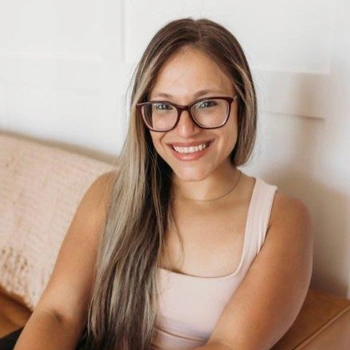
Guest Name: Dr. Ashley Figueroa Melendez
Guest Credentials: Doctor of Chiropractic
Discussion Details:
From Womb to Cradle: Supporting the mother through pregnancy and the clinical 4th trimester to optimize family wellness from day one.
Gentle Healing for Little Ones: Utilizing specialized pediatric craniosacral therapy to support newborn development, release tension and establish a healthy nervous system.
The Ultimate Preventative Care: How proactive, lifespan focused chiropractic care blocks chronic health issues before they start
Benefits of Watching:
Proactive Birth and Faster Recovery: Discover how prenatal chiropractic care optimizes your body for labor, eases physical demands of pregnancy and lays the groundwork for a smoother postpartum recovery.
The connected cores: Learn how aligning your structure supports pelvic floor health and core integrity during the massive transitions of the childbearing years.
A blueprint for the 4th trimester: Get actionable, proactive insights on navigating postpartum care so you can transition from surviving the early months to thriving as a new family.
Address of Guests’ Business:
Optimized Sports and Family Wellness Center
22149 Davis Drive Suite 135 Sterling VA 20164
Hi.
Nice-
Good to be here
… nice to meet you. Yes, we’re meeting each other for the first time.
Yay, finally.
Yeah, finally. Yes. So, Dr. Ashley, I just have a little intro about you.
Mm-hmm.
Today, I’m absolutely thrilled to introduce Dr. Ashley, a doctor of chiropractic who specializes in pre and postnatal care, pediatrics, and complete family wellness. Whether she is supporting expectant mothers through an optimized birth journey or helping infants and teens overcome challenges like reflux, colic, and developmental milestones, Dr. Ashley ensures the brain and the nervous system are communicating flawlessly. She looks at the whole family unit, dads included, to help everyone adapt beautifully to life’s stressors, a philosophy she lives through her strength training, CrossFit, and track and field. We are so incredibly aligned in our mission to elevate your body’s potential. So please join me and give me a warm welcome to Dr. Ashley. Welcome.
Thank you. Glad to be here.
Yay. So, I just wanted you to discuss a little bit about how you got into this field and how you started working with women’s health and pediatrics as well.
Okay. So fun fact, I wanted to be a lawyer growing up.
Okay.
So I did not have a lot of exposure to chiropractic, only with my mom. She suffered with a lot of migraines and headaches, and it was the only thing that helped her. So I was never being adjusted at that point, but I was with the appointments with her. So when I was in senior year, I had the option to shadow, or a weekend to see this chiropractic school, which I’m like, “Sure, let’s see it.” It’s fun to get away from back home for the summer.
Yeah.
And I think I fell in love with the philosophy. And once I was in school, I always been an athlete, so I was very interested about the sports aspect of the profession, because it can help maximize the level as, like as yourself, as an athlete, but as well, I was interested in neurological things because my own issues that I have experienced as when I was a kid. But then I’m like, if I can help the beginning of life or through that process, it’ll benefit the whole family later on. And it’s just working with pregnant moms or babies, it feels different. It’s a happy place. I love working with the whole family, but it’s just different. I enjoy it, have a lot of more fun to support those or being that last hope for families.
Yeah. And then when you’re working with the child at that age, you’re almost helping to lead them down a path of more of a healthier body, a healthier-
Right
… brain. Maybe even preventing things from happening in the future when you’re working at such an early age, and there’s so many benefits to working with the newborn as well.
It is.
Yeah. Great-
Because if we give the body the tools that it needs, your body’s meant to heal itself. But sometimes it just needs a little bit of push.
Yes. I love that. And so when did you, I think you answered some of this, but when did you first realize this work had a deeper meaning and beyond the medical side?
I think it was when I was in starting chiropractic school. I went through my whole, I got health issues, like a week in ICU, and I was 20 years old with four visits and a lot of things like that.
Okay.
So, I needed to step back, and I was able to shadow a lot of chiropractors who are interns, work with families. And if you can change, if moms, especially I like to work with pediatrics, especially pregnancy and postnatal. If you help Mom feels her cup, the whole family can thrive a little bit better.
Yes. Agreed.
Yes.
Yeah. I love that philosophy. It is, and it’s very true. Was there a specific moment or experience that led you down the path of owning your own business?
Right. Maybe, I have my whole family. I think my own parents wanted me, pushing me to do better, and the sky is the limit. And having more the flexibility to work how you want to work, and be able to support more people, I think that’s a greater meaning to just having a set script.
Yes. It’s your approach-
Mm-hmm
… right? Which is probably pretty unique to anyone else maybe that might be practicing in this area. You have that flexibility to create some kind of treatment that is all about you and very novel.
Yes.
Yeah.
So, as well, we do personalized treatment, and every visit is different. So let’s say if I have a patient that may require… Our visits are 20 minutes long-
Yeah
… each visit, so I can, that quality time.
Yeah.
But as well, if I have a baby or a pregnant mom or postpartum, that may need a little bit more Like having the flexibility to say, oh, instead of 20 minutes, the visit is 30 minutes, 40 minutes, to be able to allow. Especially with a newborn.
Yeah.
You need to breastfeed, you need to-
Yeah
… take a step back. So that flexibility-
Yeah
… I really like.
Yeah. And you’re optimizing quality care at the same time as well.
Yeah.
Well, you mentioned that you work with some women, and you like working with women, but what kind of patients tend to thrive in your care?
So I do have a lot of prenatal, postnatal, sometimes fertility, because I have my master’s through, I do functional medicine. That’s my master part of-
Okay
… my education.
Yeah.
But as well, a lot of babies.
Okay. Yes. And can you tell me about a patient success story that kind of stayed with you?
I think I have a few. One when I was in Florida, because after I graduated, I moved to Florida to work. I think I had this baby, if I’m not mistaken, have a lot of ear infections, and sore throat, and getting sick a lot, and they were to the point to get their tooth removed.
Okay.
And when mom came in, as someone recommended us, like, hey, at some point when it’s that point, it’s like we’re last resource because the education is not there.
Yeah.
So by doing gentle adjustments, cranial work, a lot of fascial work, we were able to prevent having his ear removed, and the incidents of the ear infections, instead of having like four a month, it went like once a few months.
Okay.
And later on, it kind of stopped, I think.
Yeah. That’s amazing. Can you talk a little bit more about, I think it’s called craniosacral therapy, and it might be something different that you provide. But can you tell me a little bit about what that is, and why that’s beneficial as a newborn?
So with a lot of times, one it’s like it works to making sure the cranials and the sacrum are moving properly. So we all have a pump. Like say, there was spinal fluid, that’s the fluid that your brain floats in. So our body, every time that we breathe, every time that we walk, we do have that pump to bring oxygen and nutrients to our brain, but also to take out the nasty things out. And that also works with the fascia of our body. So the more smoother and without restriction that is, the better flow and mechanics and movements of your whole body. Especially as babies, because their brain is not fully developed when they’re born, to be able to go through the birth canal, all the cranials have to come in together to fit through there. When they pass there, sometimes they may not expand evenly on both sides.
Mm.
So that can create a lot of restrictions on the baby’s body. Or if it’s like a vaginal birth or a belly birth, that’s what I call the C-sections.
Mm-hmm.
I think that sounds prettier.
Yeah.
So a lot of that twisting, when they’re twisting and pulling, that can create a lot of tension on the trapezius, like right here on the muscles, or on the clavicle, like up here on the shoulders. Or the positions that were in the belly. Maybe they were breech for all the pregnancy, or transverse.
Mm-hmm.
But when they come out, then they tend to hold a lot more restrictions. So that type of body work allow them to have a more relaxed and calmer baby.
Yeah. Okay. And I’m sure you probably see the benefits of it, like I think I see a lot of people on the other end, where maybe they needed craniosacral work in the very beginnings of life, and now they’re having all these issues in the future.
Mm-hmm.
But I don’t think that people realize sometimes that the babies are actually going through a lot, a huge transition-
Mm-hmm
… coming from this space that’s pretty crammed and tight, and then all of a sudden into the world where they’re having all these forces of pressure and gravity against them.
Right. Yeah. Mm-hmm.
Right? And so, I can definitely see the science and the benefits with helping to support their body and their development with that. Okay. So can you talk to me about if someone’s being hesitant or unsure about reaching out, what would you want them to know?
I want them probably to know that it’s a safe space. They’re welcome, and we thrive on meeting them where they are. We don’t push anything, and we thrive in education. They have a say to have an informed decision at the end of the day. So it’s very safe treatment.
Yeah.
And we explain mostly everything, and they have a chance to say no. Like, “I don’t like that.” And then, okay, we’ll look for something else that can work and that you feel comfortable.
Yeah.
Because if you’re not comfortable with something, and you’re stressed, anxious, then that will get perceived through the body.
Yeah.
And it’s kind of like pushing a push.
Yeah.
Then instead of creating some calm in the nervous system, we’re over-stimulating it again.
Yes.
So I think it’s that. We’re meeting them where they are, and we’re a safe space.
Yeah. Yes. So as a first time patient, whether pediatric or adult, what would a first session be like with you? An initial evaluation consult.
So when they come in, we greet, we sit down. Hopefully they filled out the intake form.
Yeah.
So I have a chance to look it up in advance.
Yeah.
Too, and have a few questions if I need to. Some cases that’s not the case, that’s totally fine. So but going through the intake form, and yes, they can write it, but it’s a lot of times more in the deeper questions-
Yeah
… of what they already answered to try to find the root cause.
Yeah.
And from there, we go to orthopedic examinations, or if it’s a baby, primitive reflex, if it’s a newborn, to see where they are, or developmental window they are to meet them or be able to support their brain as much as possible.
Okay.
And with adult, it will be more like an adult examination of orthopedic tests, muscle tests.
Okay.
And go from there, and feel the body, and what they need.
Okay. That’s very comprehensive. So, do you offer craniosacral therapy for adults as well as pediatrics, or just pediatrics?
Both.
Okay.
I do both.
Okay. That’s good to know. Okay, great. Well, thank you so much. Thanks for taking the time today to speak to me and talk to me about some of your services, talking a little bit about pediatrics and craniosacral therapy, something that maybe some people don’t know about just yet. But I do feel like I see as a physical therapist, and seeing development over the years, I think so much starts from up here.
Yeah.
So thank you so much for meeting me today.
It’s my pleasure. It’s so nice to meet you.