Spotlight Series
Topic: What it truly means to offer holistic care that honors the mind-body connection.
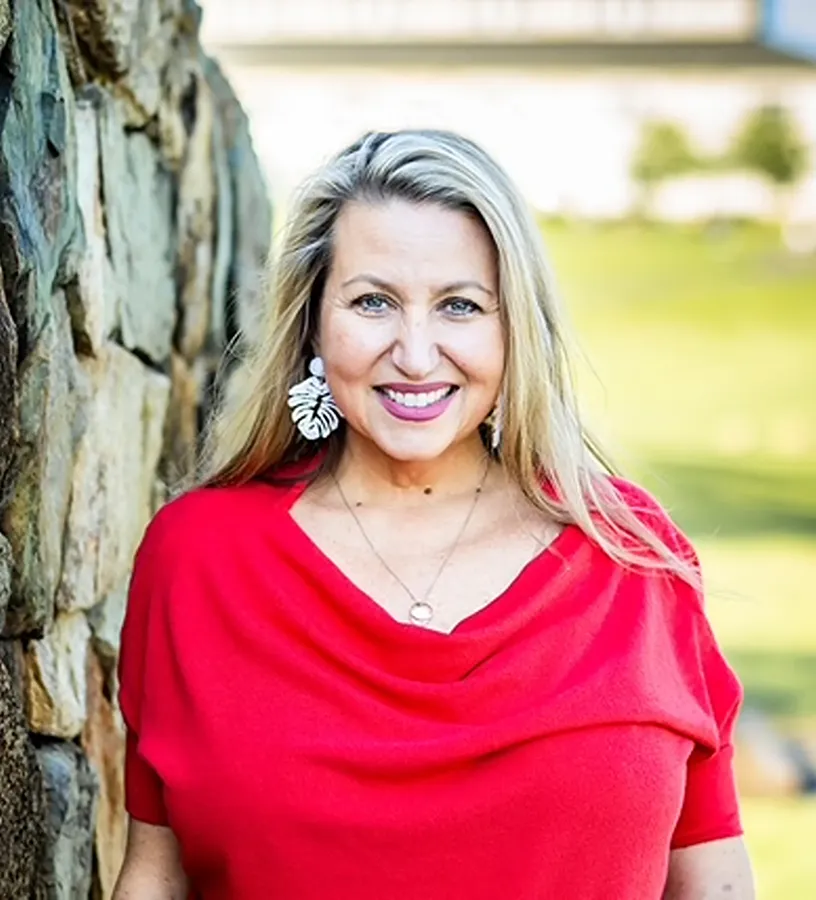
Guest Name: Hilary Stowers
Guest Credentials: M.Ed., NCC
Discussion Details:
Hilary Stowers is a Certified Grief Counselor and direct clinician offering trauma-informed, holistic care built on the principle that clients need to be seen, heard, and understood. Her practice supports high-achieving caregivers, individuals navigating chronic illness or grief, and those experiencing high-functioning anxiety, high-functioning depression, or codependency as they reclaim their sense of self. To address the root causes of distress, she offers individual counseling, dyad (relational) counseling, and EMDR trauma therapy. Recognizing that emotional, physical, and practical health are deeply connected, she prioritizes vetted referrals and multidisciplinary collaboration with healthcare, legal, and financial professionals. Additionally, she offers community education through speaking engagements, workshops, and educational lives on topics like stress, chronic illness, and mental health.
Benefits of Watching:
1. Real talk: True healing starts when you feel fully seen, heard, and understood—not just handed a quick fix. Are you running on empty? Caring for everyone else while losing yourself in the process isn’t sustainable. It’s time to put your own air mask on first.
2. Beyond surface-level care: Whether it’s high-functioning anxiety, chronic illness, or navigating grief, we look for the why—connecting the dots between your mind, body, and life transitions.
3. Healing isn’t one-size-fits-all: From individual & relational dyad counseling to trauma-focused EMDR, therapy should match your exact needs.
4. You don’t have to navigate this alone: With direct, compassionate support and a trusted network of vetted healthcare partners, you get complete, whole-person care.
Address of Guests’ Business:
222 Catoctin Circle SE, Suite 122, Leesburg, VA 20175
Hi, I’m Viraj, a physical therapist and owner of Accelerate Physical Therapy, and this is my professional spotlight series. Today I’m featuring Hilary Stowers with Hilary Stowers Counseling. Hey Hilary.
Hi, thanks for having me. Yeah, I’m so excited to have you here. I just have a quick intro that I’m going to read about you.
We are thrilled to kick off our professional spotlight series with an interview featuring Hilary, a mental health clinician whose unique journey blends a strong corporate background with holistic healing. After transitioning from an extensive career in finance, Hilary channeled her personal health challenges and experiences with grief into a passion for comprehensive client wellness. Today, she integrates holistic health certification, specialized grief training, and eye movement desensitization and reprocessing, called EMDR, to create a safe, transformative space for others to heal and grow.
Join us as we dive into her inspiring story and explore her integrative framework for effective, meaningful change. And then I just want to share this unique fact about you: Hilary has been a SPIN indoor cycling instructor since 2007, and she was a lifeguard for Disney one summer in college. She has been gluten-free since 2008.
That takes a lot of training and self-control. And both of her paternal grandparents lived to be over 100 years old and were married 77 years. That’s amazing.
Got good genes there. And prior to entering the field of mental health counseling, she’s worked in financial services for over 20 years. Wow.
Yes, all that is true. Oh, wow. So tell me what initially drew you to your specialty.
It’s kind of a roundabout way of getting there, but unfortunately for me in 2001, I was infected with Lyme disease, and I’ll say unknowingly infected. I was misdiagnosed by a doctor in La Jolla. I was living in Southern California at the time, and it went on to wreak havoc on my thyroid, and I had all sorts of other health problems.
And then it activated another unknown condition that I didn’t realize until probably 2014, but it was called lipedema. So I was suffering for like nine years, and we moved back to the East Coast, and I was just going to all sorts of different doctors and finally ended up with a pair of holistic physicians here in Loudoun County. It was a husband and wife team.
And it was with them that I decided to go gluten-free at that point. They still didn’t know what was wrong with me, but that helped me for the first year. So that was about seven years into my illness.
And then I decided to go back to school. This was in New York City to get certified as a holistic health counselor. And I was really realizing the impact of nutrition on my health.
And so in 2009, I enrolled in this program and started going up to New York City. And ultimately that summer of 2010, about a month before I graduated from the program, the doctors had tested me for Lyme disease, which is endemic in Loudoun County, but I was infected in California. It’s known as California’s hidden epidemic.
And they said, I tested positive, like off the charts and they had to call the CDC. So it was that summer of 2010 that I started to begin treatment for the Lyme. Well, two to three years into that, I had decided as a result of what I learned that I wanted to use my certification to work with other patients, Lyme patients at first.
So I worked with what they call LLMDs Lyme literate medical doctors or LAMPS Lyme aware medical practitioners, and they would send their patients to me, and I’d help them relearn how to grocery shop and cook and eat for their newfound condition. And then as time went on, cause I had this regular, as you said, this day job in finance, but I’m like teaching spin nights and weekends. And I’m doing this counseling in the nutrition space because I was passionate about it.
And then I started getting more, I’ll call it run-of-the-mill people coming to me under the auspices of wanting to lose weight. And I would figure out with some of them, it really wasn’t about what they were eating. The weight was just a symptom.
And the best example I can give is I remember a particular female client had, um, had been emotionally eating and she essentially had been sexually abused as a child and she never told anybody. And so the emotional eating was just a manifestation of that unresolved trauma. So I was having success with people like her and they would want to refer people to me.
And I’m like, well, I’m just a certified, you know, nutrition counselor. I am not a therapist. And, um, then I started to think, and this is by this point, we’re talking like at 2020, just at the onset of the pandemic.
And I was like, well, why not me? So I spent all of 2020 researching clinical mental health counseling programs that had the appropriate accreditation. And then I ended up leaving the world of finance in my forties to start over again, to get this education. And I know that was a very long answer, but that’s how I got here.
Okay. That’s amazing. Nothing like something happening to you to start a passion project, right? And a career.
Yeah. They say research is me search. Yes.
Yes. Tell me a little bit about what core values shape your approach to patient care. Well, I say when I’m in the therapeutic setting, and I’m here in my office right now, that a human’s greatest need is to be seen, heard, and understood.
And I use the acronym SHU. So I think what I do a lot in this space is I, you know, if I’m functioning as a grief counselor, I bear witness to their grief. I do a lot of validation.
Um, I work with people who have been, um, misdiagnosed who have chronic illness, and they’ve experienced a lot of invalidation in the medical world. So I think that’s important. And I take a holistic approach to working with that person.
So the best example I can give is if a 50-year-old woman comes in to see me with the presenting issue of anxiety, I’m looking at her, like, what is her nutrition? Is having a sugary Starbucks, you know, caffeine-filled coffee beverage in the morning and a red bowl, like, is that why she has anxiety? Or maybe that’s something event-driven or situational. She could be estranged from her adult child. She could be going through a tumultuous time in her marriage or her career.
What is going on with her situationally? And then I would look at it, like, is this something more chemical where I would need to refer her out to a psychiatrist, or because of the age it could be hormonal. In which case I might need to say like, okay, have you had your hormones tested? Maybe we should look into referring you out to, um, a medical professional to determine if she needs menopause hormone therapy. Um, and it’s really important to me to work with vetted professionals when I’m making these referrals.
Um, and I would say like, I know those are a bunch of different examples, but the way that I would sum up my core values is that I use compassion, authenticity, collaboration, um, and respect for the mind-body connection. When I take this trauma-informed, grief-informed, um, holistic care and approach to treating the clients in hopes that they make lasting, meaningful change. And I always tell them, you know, you are the expert of you.
Yes. It seems like you’re very, um, root-based. And then based on what you find, you make the appropriate referrals, um, to help them.
Yep. Very unique. So tell me about what kind of patients thrive in your care.
I would say people who recognize something is not working in their lives and they’re ready to do something about it. So somebody who is ready to make change. Um, I noticed that clients may have lost a sense of self or a sense of agency along the way.
And I view it as sort of a reclamation so they can curate the lives, the futures, the families, the health, um, that they desire. And I, I see a lot of people in the sandwich generation who maybe have like young adult kids or teens still at home, or maybe in college or just out of college. And then they have elderly parents.
So they’re caring for these two different generations and themselves. And I think that they haven’t had the luxury to think about themselves. So now they’re at a point where they’re ready to seek help in putting their own air mask on first, and they’re ready to prioritize their physical and mental health.
So like you were saying before, I’m always looking for the root cause; I’m always looking for the why regarding their presenting issues. Um, and I also think that getting people more dialed into using their intuition is important because sometimes when clients are so focused on others, it’s hard to get back to, you know, get that dialed back in, I’ll say, and that’s a critical part of their reclamation is to get back in touch with themselves and their own instincts. Um, and the people who I work with in my specialized areas of training are those who are grieving, those who need to address trauma, people who are ready to establish and maintain boundaries.
Some people are maybe high functioning codependence. Um, those are some of the areas that I work in. And I also see a lot of high achievers, and some of those high achievers could have high functioning anxiety or HFA, or they could have high functioning, uh, depression or HFD.
Um, so a lot of times those are harder to recognize because like high functioning anxiety can be, it can show up as a positive thing as a person who’s really successful and the high functioning depression, they can mask a lot, but underneath, you know, there’s exhaustion, there’s hopelessness, there’s a lack of joy, but the outward competence often masks their emotional distress. And as I mentioned before, because of my own personal journey, I do a lot of work in the Lyme community and in the community of lipedema, um, where patients have experienced medical gaslighting, anxiety, isolation, different self-esteem issues, other challenges that are associated with chronic illness. And there are two areas I really want to highlight because I think people understand grief in a traditional sense, like someone has died and there’s natural grief that comes with that with a loved one or a pet.
Um, but when you have a divorce or if you have a chronic illness, loss can show up in different forms. And I often have to help support people outside the traditional sense of bereavement with ambiguous loss and disenfranchised grief. And the ambiguous loss is really when the shift is, uh, or excuse me, the loss is ongoing.
It’s shifting. It’s uncertain. And the loss itself can be invisible to others.
Um, disenfranchised grief is when it’s not acknowledged. It’s not validated. It’s not supported by society.
I like to say, like, this is the kind of thing where nobody’s bringing you a casserole. When someone dies, they’re going to bring you a casserole. When you’re experiencing this ambiguous loss or disenfranchised grief, no one’s bringing you a casserole.
And it happens when your loss doesn’t fit societal norms, as far as what’s considered appropriate to grieve or who they deem entitled to grieve. So I see grief showing up in a lot of different ways. Um, but most people know the original five stages of grief.
And then there was a sixth added posthumously, um, by David Kessler, where I received my training, uh, with permission from Elizabeth Kubler-Ross’s family. So it’s denial, anger, bargaining, depression, acceptance. And the last one is finding meaning.
So I do a lot to support people regardless of the reason that they have grief. And I talk about like, healthy ways to address it. And I say things like name it to tame it, you know, talk about it with someone else, journal about it, have an expressive outlet.
One thing that we all do that I don’t think people realize is we, we judge our own grief. And sometimes we judge each other’s grief. And I say, it’s really important to not judge yours and not to let anyone, you know, judge your experience.
And of course, like seeking support through friends or networks, or of course, I’m going to say as a therapist through a therapist. So that’s really interesting. So, where do you see- you mentioned the anxiety, um, that that’s coming along with this, and where would someone see these disturbances other than just feeling anxious? Do they see it, see it in other things, and it affects their marriage and their social life and their work and their, um, in their fitness routine? Where would they see it? What kind of services do you have to help them to support them in their journey? I would say the things that come to mind, top of mind, are grief can show up as experiencing anger, frustration, shame, guilt, emotional fatigue, isolation, and sometimes feeling numbness.
There’s something called anhedonia, which is essentially something that used to bring you joy no longer bringing you joy. So all of those things can show up in the ways that you described. Somebody might have been like really dedicated to their workout routine, but they’ve given up on that, or in their marriage or romantic partnership, or as a parent, or in the workplace.
Um, it doesn’t discriminate, but the type of counseling that I provide is to individuals as adults. Um, I do have a few minor clients, um, but I don’t; that’s not my wheelhouse. That’s not, um, where I tend to, to focus.
So I see adults. And then I also offer what we refer to as like dyad-type counseling or relational counseling. And it extends well beyond like couples therapy.
Like, this is for non-romantic relationships where, um, maybe it’s between siblings, or it could be an adult and an adult child who are having, like, a semi-estrangement or estrangement or whatever type of conflict, whatever you view as a close, valuable relationship that’s struggling. So when you’re talking about, you know, how would we see grief showing up? You could have one person in a relationship where that’s where they are. And, you know, this other person in their life who cares for them, it’s impacting their relationship.
So they might show up together, or the person might show up on his or her own. Um, and you mentioned with, with your kind introduction that I focus on, um, movement desensitization and reprocessing, which is known as EMDR. It was designed in the 1980s by a woman by the name of Dr. Francine Shapiro, and she’s no longer with us.
And it was used to treat PTSD. And I’ll just try to kind of break it down and lay people terms, but it helps people address, um, traumatic or distressing memories. So they feel less emotionally intense.
So essentially it’s something that may have happened a while back, but it’s popping up like whack-a-mole in your life today. And we use what’s called BLS, bilateral stimulation. If it’s, you know, in person or over telehealth, you can use fingers.
Um, sometimes I’ll have them do butterfly tapping, like high on the clavicle or lower on their chest and arms. Um, we have light scopes that certain practitioners will use. Um, when I have someone in my office, I’ll use these tappers that vibrate, but essentially that BLS, the bilateral stimulation, we have the client focus on a difficult memory, and the goal is to help their brain reprocess it.
So the experience feels less activating in the present. So, um, that is like a specialization within the type of counseling that I do. And that’s with individuals.
And then beyond therapy, I do different speaking engagements. Like I’ve served on panels, excuse me, for mental health, grief, um, navigating chronic illness, self-advocacy, and other relevant topics. And I’ve done it on both public platforms and for private events like conferences, panels, and podcasts.
So, um, those are kind of the lanes that I stay in. Okay. That’s very interesting.
So you have multi-modal; you kind of have different techniques to help each individual. How does your care, you mentioned that you look for the root cause and then you have a lot of referrals that you give out. How do you complement your care with physical therapy and other pro and other providers for your multidisciplinary approach to healing? Well, I think, you know, working with someone like you is a real plus for me because I know you and I can speak to you and your skills, abilities, and professionalism.
And that’s really important to me, especially as a person who’s been medically gaslit herself. And I think because I market myself as a holistic, uh, mental health counselor, I have to take that holistic approach to client care. So if someone is recovering from surgery, from injury, a chronic illness, whatever the health condition, um, in addition to that suffering that they’re experiencing in a physical sense, there are psychological and emotional challenges that go beyond the physical healing.
So if I collaborate with you as a physical therapist or any other allied, uh, mental health, or excuse me, allied healthcare professionals, um, to complement, you know, my mental health services, it creates a more comprehensive approach to the patient in your world. You use the term patient in my world; client. Their care, supporting physical recovery and emotional wellbeing. And it ultimately leads to better outcomes for them.
And beyond working with people like yourself and MDs and PAs and naturopaths, um, manual lymphatic drainage therapists, all of those folks. I also collaborate with family law attorneys because I’m often working with people who might be going through a divorce. Um, I work with financial advisors.
If there’s been death or divorce, there are estates and assets under management things to handle. And even because of my grief counseling, I work with funeral directors; their, um, knowledge and training as far as dealing with the bereaved only goes so far. So for me to work with these trusted professionals, it’s in order to provide this holistic approach to clients who are facing loss or major life transitions or divorce.
Um, and I think that they benefit as do we from a coordinated approach that takes into account both the practical and the emotional aspects of their experience. Yes, it’s definitely, um, more of a collaborative approach versus competitive. And that’s, that’s the way that it has to, I think that’s how healthcare should be.
You can’t fix them all, you know, by yourself; it definitely takes a village. Yeah. So for a first-time patient, what should they expect at your visit? Well, as I mentioned, I offer the no-charge consultations, which, depending on where they’re located, might be in person in this office.
Um, some people are fine with the telephone, um, and then telehealth, because I want to make sure I’m the right fit for you. I don’t want people to get two or three sessions in and it not be the right fit. I’m trying to see, can I help this person? And I want them to get a feel for me.
And the ultimate goal is even if it’s not me finding the right person for you. Like for example, if somebody has a very niche problem and I have another therapist who I know who handles that niche, I will refer that person out. So even if they don’t get the help from me, they’ll get it because that is the ultimate goal.
I personally don’t deal with access to disorders. Like if somebody has bipolar or schizophrenia or, um, you know, anything under that umbrella, they typically require psychiatric care and med management, but when they do, you know, if they decide to work with me and I’m a very direct person, I’m a direct provider or clinician. Um, the first session, I spend just a few minutes on housekeeping and administrative items, but really we’re trying to get to know one another.
I need to know who the key players are in your life, um, exploring their background, what brought them to me, what they hope to achieve. And the early sessions that we have together, um, really lay the foundation for the work that we ultimately do together. Okay.
That’s great. Thank you. And then tell me, let me ask you, um, something that I’ve kind of come across, um, here and there with patients that I’ve interacted with: you know, AI is very, uh, dominant out there.
We use, we use it a lot for a lot of things in life. I use it. Um, but when it comes to healthcare, um, I’ve been getting, uh, patients who say, you know, well, you know, can I just, uh, you know, ask Gemini how to fix my wrist or help me rehab my knee and everything will kind of, you know, come up and they’ll get exercises and they’ll be doing it completely wrong.
But, um, do you have anything to say when it comes to, you know, when somebody were to go to Gemini to talk about, to have talk therapy or to ask it to, like, help it with anxiety? I mean, what are your thoughts on that? What would you say to somebody who would ask you something like that? Well, much like you, I have received clients. Um, they tend to be on the younger side when they ask, but you know, they’ll say, well, I asked ChatGPT this or that or the other. Um, I feel like this can be a good and a bad thing.
Good in the sense that if you use it properly, so, um, you know, you might want to say something like, like I use the term anhedonia earlier, like what does anhedonia mean? That’s pretty harmless to ask chat. I actually test it just so you know; there’s this woman I love, her name’s Dr. Romney, and she specializes in narcissistic abuse. And so I’ll test it, and I’ll say, what is yellow rocking? And then it doesn’t know.
And then I’ll say, what is Dr. Romney’s concept of yellow rocking? And then it will get it. So I just am kind of curious to see, like, how accurate the information is. I think it’s dangerous when people start to rely on it for, like, the example you just gave: giving stretches or, you know, something exercises to do for a body part that are unguided.
Um, and with the mental health component, I just actually listened to an Oprah podcast where they were talking about, um, some of these larger AI tech companies being sued by families because, um, children took their own lives. Uh, the chatbots were like instructing them or discouraging them from, um, talking to their parents. And I get very nervous.
You know, you have someone who is, let’s say like, I’m not a crisis counselor and I don’t present myself to be, but if someone is having a crisis, we want them to call nine, eight, eight. If it’s a mental health crisis crisis call nine, eight, eight. We don’t want you going to ChatGPT.
We don’t know what they’re going to say. It’s the wild, wild West out there. Um, and you know, it’s, it’s just a fine line between what is informative and accurate versus attempting to get the kind of advice from a chatbot, which by the way, every time you engage with it, somebody is making money.
You have to kind of like follow the money. Um, you don’t know what kind of advice you’re going to get when you’re working with a clinician, and you’re sitting across from me in my office, or we’re doing a telehealth call. Like, I know the player is in your family.
I know what matters to you. We have built a therapeutic relationship. We have a rapport.
Um, and it’s, there’s no substitute for that. There simply isn’t. And that’s, you know, I know that I could say a lot about this topic, but those are just a few things that come to the top of my mind.
Yeah. Nothing beats human connection. You have to have that human connection.
And that’s especially for something like dealing with the management of the anxiety and the grief and the counseling; you have a human connection, go see a therapist. Don’t get on Gemini. Um, talk to me, anything else you want to highlight about your services at all, or anything you want to speak about? Um, you know, I want people to know, because I worked for an agency before I went out on my own, that I run a solo practice.
And so I am wholeheartedly invested in my clients; when they are seeking services, they get me. So, you know, I’m a person like I have a business Instagram account. I’m kind of late to that game.
I just launched it last fall. Um, and I have someone who runs it for me, but, um, other than that, their time with me, the client’s time with me, is in this room. It’s not over telehealth.
I’m helping schedule. I’m the one who’s answering your questions in the HIPAA-compliant chat portal. Um, and I’m the one who is corresponding via email.
You get me. So I’m not out there like trying to sell a good or a service or a product. Like I am the product.
So that’s why it’s so important that people really want to work with me and that I believe I can help them. Um, and I think the work that I do matters because so many clients who have experienced complex health, uh, or emotional histories, they have often felt misunderstood or dismissed, um, when their healthcare wasn’t well integrated across different, uh, platforms or providers, I should say, like you were just talking about the AI thing and how is AI seeing, hearing, and understanding you it’s it can’t, you know, this acronym that I use in my practice. So my approach is prioritizing attunement to that client, collaboration on behalf of that client, emotional safety for that client and creating space for them to heal and make meaning out of their own lived experiences while I help them rebuild a sense of agency and self-trust.
And while I myself might be clinically educated and have specialized training in different fields, I believe lived experiences provide a unique lens through which I’m better able to help those clients. So, um, I think that’s important to say. And, and I’ll say lastly, that there’s a saying, and I don’t know who to attribute this to, but it resonates with me that, um, people show you what their priorities are by how they spend their time, how they spend their money, and with whom.
So I know when someone comes to see me or when someone comes to see you, they are prioritizing their mental health, their physical health. Like, I remember my parents telling me as a young girl, if you don’t have your health, you don’t have anything. And so I have a lot of respect and admiration for people who do make that a priority.
Um, and I don’t, don’t take it lightly. I don’t take my responsibility lightly. And I think about having been with my family members, the grandparents that you mentioned earlier; I was with them when they died, both of them.
And I was with my mother in the last week of her life. And I think it was an honor and a privilege to do that. And what I get to do in this room and with my clients is also an honor and a privilege.
And that is the only other time I’ve said that in my life. Well, thank you so much, Hillary. Thank you for sharing your passion.
Thank you for sharing your story. Um, I can tell you’re so passionate about what you do, and I’ve met you, and we’ve chatted, and it’s, it’s the same energy that I get from you, um, now. And, um, thanks for sharing all this and, um, and taking the time out to talk to me today.
Yes, it’s my pleasure. Thank you so much for having me.