
Spotlight Series
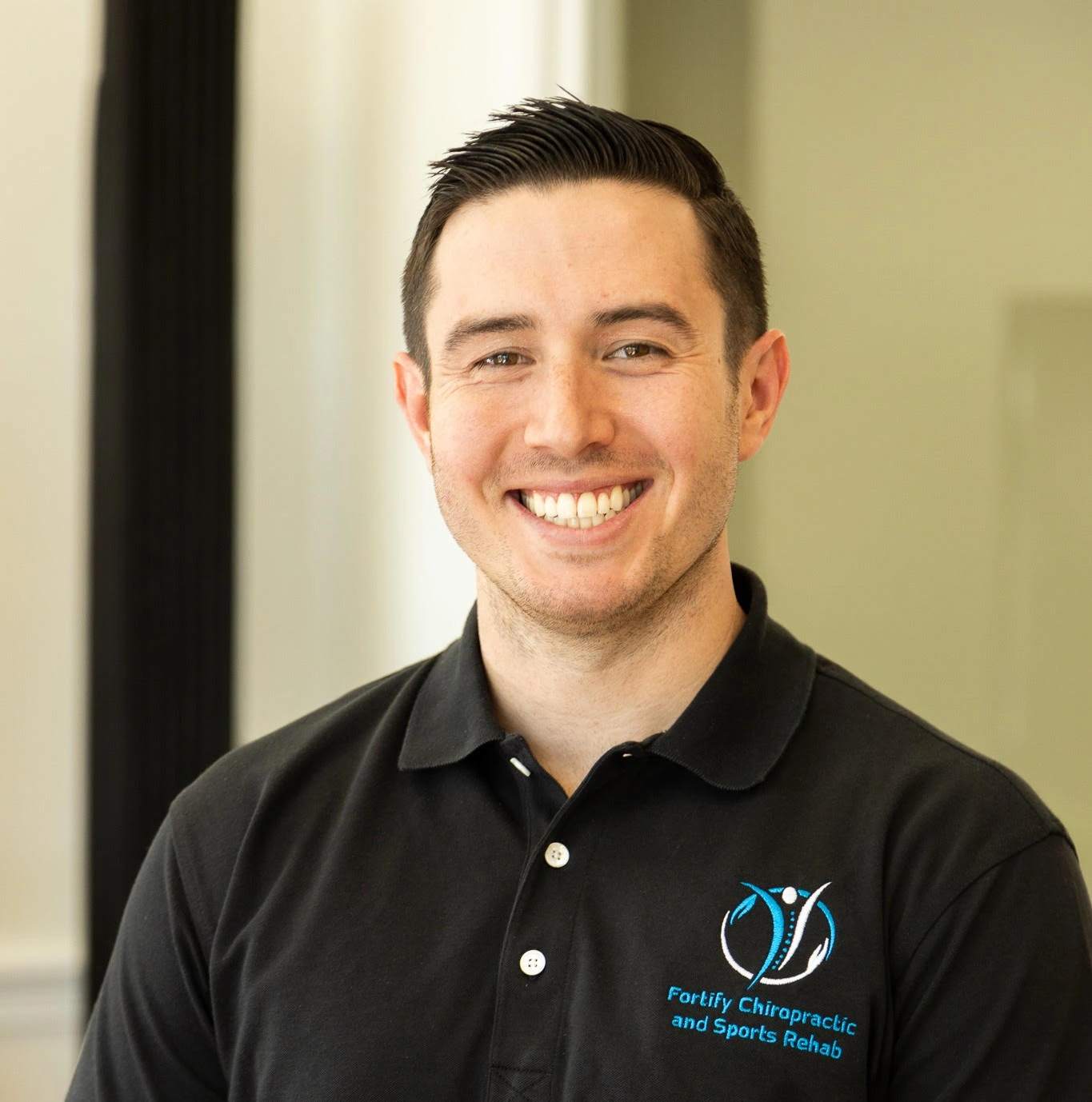
Guest Name: Dr. Chris Grivas, DC
Guest Credentials: Doctor of Chiropractic
Discussion Details:
Dr. Chris Grivas explains how to move beyond symptom relief by identifying the mechanical “why” behind chronic pain and using patient education to turn recovery into an active partnership. You will learn how integrating chiropractic care with physical rehabilitation creates a multidisciplinary approach that solves injuries rather than just masking them. The conversation emphasizes that the key to long term health is understanding your own anatomy and physiology daily movement to stay out of the clinic.
Benefits of Watching:
The “Why” behind the pain; Dr. Grivas moves past quick fixes to identify the correct mechanical problems behind the long-standing pain.
The Power of Patient Education: Dr. Grivas explains why he designs a program for those who want to be active participants in their health rather than passive recipients and the benefits of healing on that level.
Collaboration over Competition: You’ll understand how chiropractic care, physical therapy and rehab exercises can work together to create a faster, more effective healing environment.
Simple Strategies for Longevity: Learn one foundational step you can take today to prioritize your health and stay out of the doctor’s office.
Address of Guests’ Business:
Fortify Chiropractic and Sports Rehab
43130 Amberwood Plaza Suite 105
Chantilly, VA 20152
Today, I am interviewing Dr. Chris Grivas with Fortify Chiropractic and Sports Rehab. Hi, Chris. Nice to see you.
Hi there.
Nice to see you as well.
Just a quick intro about Chris. Dr. Chris Grivas studied health sciences at James Madison University, and then chiropractic medicine in New York.
He received his Doctor of Chiropractic and his master’s degree in clinical anatomy and physiology instruction, which is so cool, one of my favorite classes in PT school.
Dr. Chris Grivas has experience treating patients of all ages and athletic levels, including professional athletes from the Washington Commanders, the DC United Soccer Club, and XFL Washington Defenders.
Additionally, Dr. Chris Grivas has pursued a specialty in prenatal chiropractic, which is his second passion.
He’s certified in the Webster technique to treat expectant mothers and become an extra support to his patients during pregnancy.
So, something unique about Dr. Chris Grivas is that his main goal is to keep people out of his office.
You don’t find that very often. So tell me a little bit about why you want to keep them out of your clinic.
So, a lot of times when people come to me, they have these long-standing problems or pain, and my goal is to make them feel better, but also at the same time figure out what the problem is, and then how do we prevent it from coming back.
A lot of times in my profession, a lot of people just rack, crack, out the door, and they might feel better, which is great, but if they’re not addressing the root problem, then they’re never really truly getting better.
So my whole goal is to not only make people feel better, but also try and get them to understand what’s happening so it doesn’t keep happening over and over again.
Yeah. So I know you’re big on education.
Maybe that comes from some of your anatomy and physiology background, and educating the patients on, “Actually, this is the muscle that’s being affected. This is the joint being affected.”
And I think when the patients understand that more, they’re going to be so much more involved in their rehab journey. So, that’s great.
So what initially drew you to your specialty as a chiropractor?
I kind of fell into it backwards.
I went to James Madison. I was determined to be an athletic trainer.
And after some rotations and shadowing, it felt like it was missing something.
And unbeknownst to me, some of the neighborhood parents I grew up with were chiropractors.
So I shadowed a few of them over the course of a couple of weeks and realized I really enjoyed the fact that there was both the prehab and rehab aspect, and the proactive and reactive aspect in order to get people better and stay better. So I really liked that.
So I swapped my major over to fulfill the requirements for grad school, and then I went into it.
And even then, with all the knowledge and everything that I’ve learned, I actually practice very differently than a lot of those do, and that has allowed me to kind of become my own unique type of chiropractor.
Okay. Can you tell me a little bit about how you’re different?
You mentioned the proactive and the reactive aspect.
What kind of things set you apart?
Sure. So, my appointments are a little bit longer than most other chiropractors.
So when people come to see me, I do a lot of manual therapy or muscle work or soft tissue work, because what I’m trying to do is get those associated muscles of those areas to not be so tight.
So, research shows that joints in areas might not be moving as well, but muscles are most likely the cause of that.
So I spend a good portion of the appointment, if not most of it, trying to dig out those areas to get those areas to relax and not be as tight, and then I will go and try the adjustment at that point in time.
Mm-hmm. And I know that’s super helpful in working with some of our mutual patients, because I do feel like sometimes my clients are very tightened up to the point where I can’t do a lot of the strength training.
So, I know it’s been helpful with you going in there, opening up those spaces so they can get deeper and continue building their strength. So, that’s great.
So what are some early warning signs that someone shouldn’t ignore, which would prompt a visit to come see you?
This is important.
The biggest thing I see a lot is, I have patients that have had pain for months, and in the last recent years, that they’ve just kind of dealt with and like, “Oh, this is what it is.”
And pain is not a normal thing that people need to be living with.
And that’s your body trying to tell you, like, “Something is wrong. Fix this. Figure out what’s going on.”
And whether it’s through me or even someone like you, as great as you are with all of that, they need to go to one of us or someone else so that way they can get it addressed.
And making sure they figure out the problem, too.
Whereas there are some places and people that you go to, that you go, and they don’t really address that problem. So the problem’s always perpetually there.
And any sort of pain like that is what we really want to try and fix and prevent from being a long-standing issue.
What are some of the techniques and services that you offer to address that pain?
I know you mentioned some manual techniques, but I know you do some dry needling as well.
I do.
So, in my office, I do a lot of manual therapy in terms of, it’s kind of like you pin and stretch the muscle.
So I might put my hand on the muscle, and I take it through its range of motion to try and get that muscle tension to kind of come down in that area.
I also do muscle scraping, and yes, I do dry needling, which I find to be very helpful and effective, especially when you get to muscles at a deeper level, where muscle scraping is great, but maybe something more towards the surface, like where you’re at maybe towards elbow.
Whereas if you’re in the hip or the glutes, dry needling would be really effective with that.
Mm-hmm.
And while patients are in here, I’ll go through base mechanics in terms of things like squats… or the way they move, or they walk, to try and assess those muscles and see if they’re firing or turning on when they’re supposed to, or maybe they’re not turning on at all.
And I use all of that to help me in terms of figuring out the patient, and then in terms of treating the patient as well.
Yeah. And I’m sure they can see the shifts and changes at the very end, too, if you’re doing that performance-based evaluation.
So if they’re feeling it and sensing it in their body and in their nervous system, I think that their retention is going to be a little bit more longer and more effective, too.
Can you tell me a little bit about one of your techniques that you mentioned, the Webster technique, and how this can help expectant mothers?
So, the Webster technique is aimed to try and give the baby more room to move.
Mm-hmm.
So, I do not flip babies at all.
What I’m trying to do is that if with all the changes that happen during pregnancy, the expansion in the front and then the pelvis, everything expanding out, that’s going to affect mechanics.
So, the design of Webster technique is to try and promote movement for everyone.
So a lot of times, if the expectant mother’s not walking right or moving slightly differently, things will tighten in those areas.
So I use that same technique that I do for the manual therapy with the pin, stretch, and move to try and get those areas to loosen up a little bit.
And that includes towards the front, so that’ll be a little bit of round ligament work, as well as psoas, piriformis is another big one, glutes, and low back.
And I’m really trying to get those areas to calm down, and stop being so tight and holding everything together.
And I would think that that would promote such a better, smoother, healthy pregnancy, delivery, labor.
If things are positioned better, not so tight and wound up, that baby should be able to be delivered so much more easily, and that’s better for the mom and for the child.
So, very interesting. I love that. I love that support for moms during pregnancy.
Can you tell me a little bit about how your care as a chiropractor can complement physical therapy or other multidisciplinary alternative medicine out there?
Sure.
Early on in my chiropractic profession, I realized that there seems to be this, in my opinion, very unnecessary war between chiropractors, physical therapists, personal trainers, and it’s kind of ridiculous to me, because we can all help the mutual patient between all of us if we play to everybody’s strengths.
So for instance, I promote movement, and I’m trying to get the patient muscles and everything to drop.
And I’ll give out base rehab and exercises, but if a patient comes to me and every time that they go for a run, their hip flares back up, and it’s like, I’ve given some things, and it’s like, you know what? Something is not activating when it’s supposed to.
So, I basically become a safety net rather than someone trying to help someone out and get out of the office.
So then that would be a great time to go to a physical therapist.
So whereas we keep digging through the muscles and everything is moving great, but the activation and use of it is the problem.
So at that point, I’ll have that patient decrease coming to see me, and then increase going to see a physical therapist.
And the physical therapy I really love are the one-on-ones, where you’re with the physical therapist for anywhere between 45 minutes to an hour, whatever it is, but it’s the patient and them the whole time.
Kind of the same way how I treat with my patients, that it’s just the patient and I the whole time.
That way, the patient can establish the rapport with somebody else, be it the physical therapist or personal trainer, whomever, and then they can see, like, “Oh, you know what? This glute’s not turning on,” or, “Turns out your core is not stabilizing enough.”
And then they can fix that.
And then the patient then gets better.
And I’m really big into communication between myself and other healthcare professionals.
When I have a patient that’s seeing me, or maybe even you, then I’ll text you like, “Hey, she was in my office. I noticed these things. Let me know what your thoughts are.”
And that way, the patient can see that because I really want them to get better, as I know you do, and we have that established care, so there’s no oversight in what can get the patient better.
Mm-hmm. I love it.
And that’s what I feel like patient care should be on so many different levels and so many different disciplines.
And those are the people who are going to get better, and they’re really going to level up in their lifestyle, and they’re not going to have to keep coming back to us in the future, or keep coming back to us for the same thing over and over again.
So, I love that.
So what’s a common problem that you help people solve?
It really kind of ebbs and flows. There are times I feel like things come in waves.
Probably the biggest thing that I see the most of, at least right now, is just low back pain or just basically inability to activate and turn on.
And so a lot of times that happens with glutes that might not be firing or activating, and then the low back basically takes over.
Or somewhere, in that example, it’s that, but it’s basically something might not be working when it’s supposed to, and then there’s another muscle or group of muscles taking over.
Yeah.
And that’s where everything kind of tightens down.
So therein lies the figuring out of what is not turning on and what is tightening down, and trying to get that to loosen up, and then trying to promote that movement into that patient.
Mm-hmm. Just trying to balance everything out.
Yes.
Yeah.
So talk to me about one simple step that someone could take if they were to prioritize their health, even before they call your office.
The biggest thing is I want people to move.
At this day and age, we are starting to become more sedentary.
People are stuck behind a desk for eight hours a day or even longer at times.
And that sedentary lifestyle aspect is really what inhibits people and prevents them from being the best that they want to be.
Especially when you spend eight hours a day, you’re behind a computer, you’re behind a desk, you get home, it might be late, you don’t want to do much, and then that really just brings the patients down, because muscles and the rest of the body are all about adapting.
So when you keep using them, they’re going to adapt to be better and do better. Hopefully, usually.
And the biggest thing I tell people is just go for a walk.
Mm-hmm.
Get up. If you’re at your desk for eight hours a day, set a timer on your phone for an hour, and after that goes up, get up, and even if it’s a five-minute walk, any amount of movement is good movement, in my opinion.
And as long as you’re able to still do something, that is what’s going to help your body in the long run.
As we sit here, we crouch forward and all this, we want to just get up and move to the best that we can.
And I have a lot of patients that come see me that have been like, “Hey, I can’t do anything. I’m in pain every time I do this.”
It’s like, okay, let’s start with little things.
Get up a few times. Go up and down the stairs a couple extra times a day.
That little bit of movement will help snowball and translate to doing more that the patient wants to be able to do.
Yeah. And I see mood shifts, too. Do you? You see…
Right? What do you see?
A lot of people, they get stuck, and they get upset because they can’t be as active as they want to, and not being able to expend that energy really is a mental component to it.
Mm-hmm.
And if anything, that just shuts down further and further.
Mm-hmm.
So the more that you can, especially releasing the endorphins from just moving, will be wonderful to their mental health.
Yep. Go outside, go for a walk.
Yes.
Perfect, yeah. So if I was a first-time patient, what would I expect as my patient at the first visit?
First visit is a comprehensive exam.
Mm-hmm.
Why are you in my office?
Mm-hmm.
So I’ll have the patient go through, tell me what’s bothering them, what are the areas that are their chief complaints, and if there’s any other secondary, tertiary complaints.
And then I’ll find out a little about their history in terms of simple things like what makes them feel better, what makes them feel worse, how long have they had it, have they had surgeries.
And we’ll go through this big in-depth aspect, and it allows me to get to know the patient.
Are they super active? Are they not really active? Did they used to be active?
Is their job part of what’s going on?
And then from that point in time, then I’ll go into an exam.
I’ll check range of motion, orthopedic tests to see what’s lacking, what’s doing well, what’s flaring up.
Do they have pain shooting down their legs?
Do I have to write out a script for an MRI or X-ray?
And after I figure all that out, then what I’ll do is I’ll sit down with the patient and tell them what I’ve found.
Mm-hmm.
Is it something severe? Is it not?
And allows me to relay as best I can to the patient so they understand.
And I encourage them to ask questions.
Just because I’m a doctor doesn’t mean I’m not absolved from being asked questions. I encourage it.
So that way the patient can really start to understand that.
And I establish this rapport with the patient of there are no wrong answers in my practice.
You’re not going to hurt my feelings.
I want to know what’s going on so I can treat you to the best of my ability to make you feel better.
After I go through all that and tell them what the plan is, and I go through the biggest question which I get asked is frequency and duration.
How long and how often does this happen? Do I have to come in?
And it really kind of depends on severity.
Are their activities of daily life affected?
If they’re having a hard time just sitting at work or driving, or the biggest one for me is sleep, we probably need to start a little more frequently.
Mm-hmm.
If it’s more of an annoyance pain, then we don’t have to be as frequent.
Mm-hmm.
And depending on if it’s an acute pain, which could be something that takes between maybe four and six weeks as an average, or if it’s something chronic, have you had it for months, then it’s going to be more like six to eight weeks.
Okay?
During that time, though, I tell patients, “I don’t want to see you three times a week for eight weeks. I want your body to recognize that I’m here to help. I’m not permanent.”
So as the patient starts to feel better, I’m going to decrease them coming into my office, give them more things to do at home, and then try and phase them out of my office.
Mm-hmm.
And in that way, they now realize that they are very much a part of this care.
Mm-hmm.
This care of how are we collectively going to make you feel better.
Mm-hmm.
And that way when the patient comes in, they’ll know what to expect, and that way they can see progress themselves.
And after the first or second week, if we’re not getting any changes in anything, then we need to reassess what’s going on.
I’m not going to keep doing the same thing if it’s not yielding any results.
And telling that to the patient so they understand, so they now know what to be looking for, allows me to treat them better.
Yeah.
After all that is done, then I actually will work on them.
I will treat them on the first appointment. I know not all of my peers do that.
I feel passionate about that because if they’re here, they’re not feeling great, so why make them wait?
Mm-hmm.
And I do a very light appointment, and by light, I mean the intensity of the soft tissue I do is on the lower end, and I’m narrating to them the whole time of what’s going on and what to be expected, and then if those areas need to be adjusted, then I will adjust them and explain what that process is.
Mm-hmm. Well, it seems like that’s a pretty comprehensive first visit because they’re going to get so much information.
They’re going to get a whole diagnosis, prognosis, how long is it going to take, what to expect in the next few weeks, plus a treatment, and so that’s a pretty productive visit for them, and I’m sure they’re feeling better just walking out of your clinic after the first visit. That’s great.
Well, thank you so much. I think this was so informative.
I think that the people can get a good feel of what it feels like to actually be treated by you and how you treat.
You’re very comprehensive and educational and informative. I think that’s why your patients love you so much.
So, thanks so much for talking to me today.
Of course. I really appreciate you having me on. Thank you so much.
All right. Thanks so much.