Spotlight Series
Topic: Menopause Support in Midlife
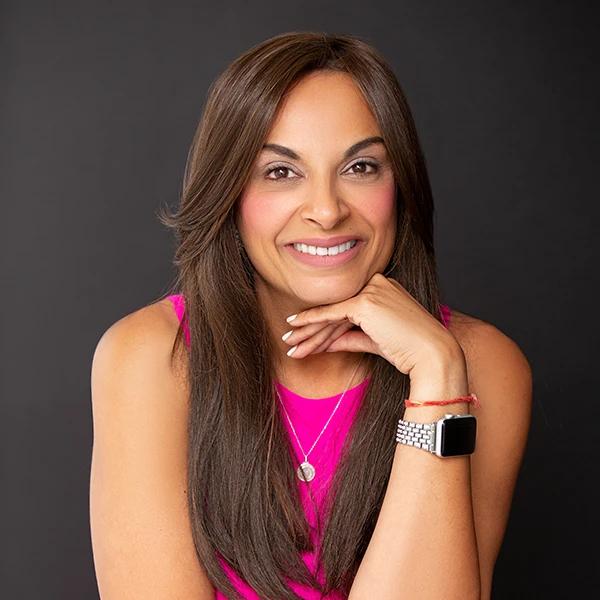
Guest Name: Dr. Kajal Roy
Guest Credentials: Board Certified Internal Medicine Doctor, Owner of Niyan Medical Spa
Discussion Details:
- How Dr. Roy started supporting women during midlife and why she’s so passionate about this subject.
- Services such as HRT, botanicals, and supplements that can support perimenopause and menopause symptoms.
- Why preventative medicine is the best approach to support women in midlife.
Benefit of Watching:
- Find out how you can start having informative discussions with your healthcare practitioner about this phase of your life, even if you’re not having any symptoms.
- What are common symptoms that you shouldn’t neglect, and what to do about them.
- What kind of proactive steps you can take to take control of your health for the future and protect yourself from cognitive issues, musculoskeletal issues, and cardiovascular issues in menopause.
- How to learn more about health during menopause.
Address of guest’s business:
Niyan Medical Spa
450 Madison Trade Plaza SE
Leesburg, VA 20175
Hello, I’m Viraj Chang, physical therapist and owner of Accelerate Physical Therapy, and this is my professional spotlight series. Today with me I have Dr. Kajal Roy. Welcome, Dr. Roy.
Hi, thanks for having me. Yeah, absolutely. Just a little intro about Dr. Roy.
Dr. Roy is a board-certified internal medicine doctor and owner of Nyan Medical Spa in Leesburg, Virginia. She takes a preventative approach to medicine and is passionate about educating the community, especially women entering perimenopause and menopause, about the steps they can take to support menopause-related symptoms to build health and resilience as they age. So I’m so excited to talk to you today.
Tell me a little bit, Nyan, what does the name of your business, Nyan, mean? So Nyan actually comes from both my kids’ names combined. So my oldest name is Nikhil and my youngest is Arian. I came up with the name because I do everything for them.
So I had to have them as a part of the business too. I love it. It gives them some bragging rights about your business. Yeah. That’s great. So Dr. Roy, tell me what initially drew you to your specialty to begin with. So it’s been an evolving journey. So I’m board-certified in internal medicine and board-certified also in obesity medicine. The shift towards menopause happened probably back in 2020.
I started treating patients with HRT back then, but what started that shift was well before that. It was really when I started to have symptoms myself and it’s quite embarrassing. I really didn’t even know what was happening. So I started to have all of these symptoms, these weird things were happening, skin rashes, my eyes were getting swollen and burning and super irritable. And for the life of me, I couldn’t figure out what was happening to the point where I had a stress test, an echo, EKGs, halter monitors. I had so many tests done and everything just came out fine.
And then I started to look into, because we’re obviously in medical school, we don’t really, as people are learning now, we don’t really learn too much about menopause. There’s not much importance on that subject, at least when I was in medical school. So I started learning about it myself and I started trying things on myself. And that’s when I actually saw the shift in what I was feeling. So yeah, now I’m here to spread the word and educate and help other women not suffer the way that I did. I love that.
I can see where your passion for helping people with these menopause related symptoms and then also chronic illnesses can stem from some of these issues too. So I think it’s really good information for people who want to take a more proactive approach to medicine versus reactive. It’s like, what can I do for myself right now? How can I put myself in the best situation, get a grip on everything now so that I can live a better life in the future? So what kind of clientele do you most frequently work with? It ranges.
So I initially started my business as a med spa, so doing Botox and things like that. So honestly, I’ve seen people as young as in their 20s wanting to come in for trap talks, you know, tight trapezius muscles, things like that. But for the hormone treatments, typically mid 40s and up, I am trying to really educate the women that are in their 30s.
30s because it’s just preparation. We get prepared for puberty. We get pulled aside in elementary school and this is what’s going to happen to your body and these are the changes that we’re going to go through.
And you get prepared for that stage of life, but nobody ever prepares us for this stage of life. And this is actually the rest of our lives. So I really want to start talking to, you know, women in their 30s, just, Hey, this is what you have to look forward to.
It can be a smooth transition and you’re not going crazy. Yeah. I want to come back to that.
Cause that’s really interesting. I know that, um, that was something that was new for me to hear is that, um, I like you started having a lot of symptoms in my mid thirties and that was when I had just had kids and I’m like, okay, well maybe things are a little off because I just had kids. I went through this huge life change in my body.
Right. And so no one was really identifying those things that were happening and that that could have been perimenopause stuff happening right there. And I think that that, if I would have gotten some protection at that phase of my life, I think that things would be significantly different in my mid forties right now.
Um, so I want to come back to talking to you about that and the steps that people can take there, but can you tell me what kind of services that you offer for the clientele specifically? Um, you know, women in perimenopause menopause, um, what kind of things do you offer that would make, that would give them the biggest impact on their life and make those changes? You mentioned HRT, but if you can discuss some, some of that a little bit more. Um, well, so in terms of HRT, um, I do offer pellets, um, injectable creams, patches, um, there are oral formulations as well. Um, but it’s, it’s really individualized.
Um, HRT may not be for everybody. Um, there are, uh, botanical based supplements that are available, um, especially for those women that are just kind of not there yet, um, but still having some symptoms. Um, there are some other things that they can take.
Um, a big thing is, is just talking. And you know, there, there are some patients where we’ll try HRT and if a lot of their symptoms are resolved, okay, then it’s a hormonal thing. Um, if they’re not, then there’s something happening in their life.
Um, whether the amount of stress is higher, the work is different, you know, kid issues, whatever it is. Um, I think as women, we take on so much now, um, that it’s hard to tease out what’s hormonal and what’s not though. Sometimes it’s just like a tested and see.
Um, so it just, it depends on the person. Honestly, it’s just, it’s really, it’s, it takes a lot of talking and figuring and figuring out what’s the best, um, where’s the best place to start. Okay.
Yeah. Do you talk to them about, um, ways that they can manage their stress as well? Is that something that, that you talked to him about if you feel like stress is an issue? Yeah. So there’s a lot of things.
I mean, I remember when I had gone to see my doctor and I was, I was studying for my boards, my recertification for my boards. And my primary doctor said to me, I was like, I just can’t, I just can’t focus. I can’t figure out what’s going on.
And she was like, you should meditate. And that day I just picked up my purse and I was like, I have to go. I can’t, I can’t do this conversation.
Um, meditation does help. It’s very hard for some people to do it. Like I, I find when I meditate, if I try to meditate, I won’t say when I meditate, because I don’t meditate, but when I do my brain just keeps going and going and going.
So that doesn’t work for me. Um, but there are other things like working out great stress reliever. Yeah.
Um, there’s, you know, I, so I do talk about different things that are out there. So everyone has to find what works for them. You know, I have a lot of patients that, um, that like to ground.
So go outside bare feet, stand in the grass, and that just really centers them. Um, I can’t do it cause I don’t like bugs. Yeah. Yeah. Yeah. Um, but yeah, there’s, I mean, there’s, there’s so many things, you know, sleep hygiene is huge. Um, you know, what you’re putting into your body is huge. Um, you know, the, uh, the amount of caffeine sugar, there’s so many, there’s so many little lifestyle changes that we can make that are also extremely helpful. Yeah.
And I think the big takeaway is just starting to, um, look at your body a little differently. Like I think before when we were younger, we were a little bit more resilient to stress. We just, we had, you know, estrogen protected us in so many different ways or having that in our body.
And so we probably didn’t realize the little things that we were doing. We were just managing it along the way. And then there’s a point where that just breaks and then we need, we need to like rethink and kind of, and I think that’s really important when people hear that conversation coming from you or have that conversation from you, it’s like, Hey, start to look at your, you can’t manage stress.
You’ve got to do these things and implement them into your life, into your, into your life. So you can, you know, stress isn’t going to go away. Yeah.
What is it? What do they call it? Like, um, habit stacking. Okay. Um, yeah.
Yeah. So like I have some patients that I, I can’t work out and I’m like, can you do squats while you’re brushing your teeth? Ah, yes. Okay.
You know, so just do something during the time where, you know, you’re going to do something, you know? Um, so just, if you’re, if you can make it a part of your life, then it doesn’t feel like a chore. Yes. Yes.
That’s kind of like atomic habits. I think they, yes. Okay.
So, okay. That’s great. And so let’s talk a little bit about, you know, you mentioned in your thirties might be a place where you might be having some symptoms and as you’re trying to figure out things that are going on, let’s keep perimenopause, um, in the, in the back of our minds, or I guess in the front of our minds as to, okay, it could be some, some symptoms that you’re having, um, menopause related symptoms or perimenopause related symptoms.
So what are your thoughts on getting support earlier in life? Um, and what can happen if women wait too long? Cause I know a lot of women can kind of wait until their fifties and sixties. When is it like too late? When do we want to maximize our time? And I know there’s different things that we can do, but when it’s like the best time and what do you recommend, um, women do earlier in life, um, to make these shifts? So I, I’m a firm believer, um, earlier is better. Um, estradiol is, is our protection.
Um, it is our joint protection. It’s our cardiovascular protection. It’s our cognitive protection.
Um, so the sooner we can, I don’t want to say, I hate using the word replacement because we’re not replacing it where we’re kind of leveling ourselves out during the process. Um, so I think as soon as we start having signs or symptoms, um, which could very well be in our mid to late thirties, um, is a great place to start. We’re not going to throw the whole kitchen sink at anybody.
Um, I think starting nice and low and gradually moving up in and changing maybe routes of administration is great. Um, in terms of when is it too late? I myself don’t plan on ever getting off of HRT, um, because I want to age healthy. I still want to do all the things.
Um, but if I, if somebody comes to me in their sixties and they’ve never had HRT, um, I wouldn’t say no. Uh, it just takes extra testing. Uh, the reason being is once you’re about 10 years post menopause, um, that’s enough time for those arteries to become hard, um, and calcified with plaque forming on the inside.
So, um, estradiol is most, most important function is it keeps our blood vessels very flexible. It doesn’t allow plaque formation to happen. So 10 years out, those vessels are now hard.
They have plaques. And if at that point we put you on estradiol and make those blood vessels flexible, again, those plaques are going to break off and cause heart attacks and strokes. Um, now in somebody that whose cardiovascular risk factors are very low, um, it’s not a definite no.
Um, again, we would have to do things like a coronary calcium score, um, see how those coronary arteries are doing. If they look, if it comes back as a zero, I would treat you. Um, and then also depending on the symptoms.
So if it’s, if somebody comes to me in their, in their sixties and their biggest concern is let’s say vaginal dryness or painful intercourse, um, we could do a, a vaginal, um, estrogen because that’s not going into your system. It’s just, it’s really localized. Um, so this just, it depends on what’s happening in and what age.
And, and there’s a lot of like, you know, patient history that goes into making these decisions. Okay. That’s really informative.
I think it’s going to help people make healthy decisions, um, given that information. Cause I think people have been getting really scared that HRT is like a no-go if these other issues are in place. And so I like that you’re, you’re informing and people can get a little bit more help make healthier decisions for themselves.
Um, all right, that’s great. So I know that you like to educate, um, as you’re kind of teaching here, I love learning all this information. I feel so empowered, but I know that you’re passionate about educating the community.
You recently hosted a few women’s health workshops in 2025. Um, and you’re hosting another one in Herndon coming up March 1st, um, highlighting menopause related symptoms. So that’s exciting.
Could you discuss why you’re so vocal about bringing more awareness around menopause related symptoms? Is there, um, something that kind of drives you? Um, I know that there was this, um, world, uh, women’s health, um, initiative that came out this past October that was pretty monumental in, in bringing about some information, um, and debunking some myths there. So if you could talk a little bit about that as well.
Yeah.
Um, so with the women’s health initiative, um, I’m going to go back to your, the first question that you asked in a minute with the women’s health initiative. Um, the way that the reports were released, um, was, was a lot of, um, I don’t know how to media scare. Like it was just that, you know, they’re, they just wanted to make it sound very spicy.
Right. Um, the way that it was reported. So when you’re looking at a research study, you want to, and you, if you want to know what is my actual risk, um, you want to look at what’s called absolute risk, not relative risk.
So, and there, there’s a huge difference. So when you’re looking at this and when you’re looking at the, the WHI study, what was reported was relative risk. Um, because it sounded exciting, you know, 25% increased chance of developing breast cancer in patients that are on estrogen.
Well, yeah, if I heard that, I would say, Oh my God, take the patch off right now. Right. Um, but the absolute risk was actually 0.08%. Um, over the whole study, they did two arms.
So one with estrogen, um, alone in patients that had, um, a history of a hysterectomy and then estrogen and progesterone in patients that still have their uterus, um, that arm where patients were on estrogen alone, decreased their cardiovascular risk factors, decreased their risk of osteoporosis and actually decreased their risk of breast cancer. Um, it was the progestin part, um, that was the issue. And the issue was with all of these studies were done in women that were already postmenopausal.
So if we’re starting early, um, then the, the risk is actually less. The risk of breast cancer is there is, yes, there’s a slight increase, is not a 25%. It’s a 0.08% chance.
Um, so that, that was, that was the big scare. And what made me, the other thing that actually made me so vocal about this is I feel bad for my mom. You know, like I feel bad for that generation that missed out.
Yeah. They missed out, you know, and they missed out on, on what could have been, you know, and, and, and now I like, I look at my mom, she’s frail and she’s, she’s little. And, and I’m so afraid, like, Oh my God, don’t fall.
Don’t fall. Cause you’re going to break something, you know? Um, and, and I just, I don’t want our generation and our younger generation to go through this. You know, I want, I want, I want to be able to enjoy, um, and still climb hills and, you know, do all the active stuff that I want to do, even in my sixties and seventies, which is God, it’s not that far.
Yeah. Yeah. Yes.
Especially if there’s something that you can do to that, you know, right now, I think we’re so lucky that we actually have this information. I know for me, like in my mid forties, I’m like, Oh, thank God I’m not like in my mid sixties and getting this info. So yeah, I would be so angry. Yeah. I would be so angry. This is, this is a great time.
Um, and so tell me a little bit about why, what you’re, what you plan on bringing with your workshops and just getting out in the community. Are you, what are you looking to, um, bring to the community and, and, um, tell these women about, honestly, it’s just education. You know, I, I, whether somebody comes to see me or goes to some, you know, another place, I just want people to make informed decisions.
Um, that is really first and foremost, my, my one thing that I wanted to send out there. Um, yeah, I actually, I got invited to, to speak this weekend at an event. They wanted me to talk about heart disease because February is heart, heart awareness month, or I can’t remember American heart association month or something.
Um, and so I asked the lady, I was like, can I weave in some menopause stuff? Because menopause and heart disease go hand in hand. And she looked at me and she goes, it does. And I was like, oh yeah, it does.
Yeah. And, um, so yeah, we’re at, she was like, can you weave a lot of it in there? Because it’s women. So I was like, yeah, okay.
Um, but even in the March 1st event, there’s going to be, you know, a ton of speakers, um, a chiropractor, a happiness coach, which I’m kind of interested in seeing what she’s got to say. Um, you know, there are, uh, medical exercise specialists that are going to come and talk about pelvic floor. Um, I wish you were coming.
Hopefully this year. Um, but yeah, there’s going to be a different perspective from each specialist. Yeah.
Yeah. And I think that it’s going to be very empowering because a lot of the women don’t know how to speak up and have these conversations with their internal medicine or their OBGYN docs. Cause they’re not, they might not be talking about it, but just empowering them and educating them so that they can get out there and start like kind of advocate for themselves, advocating for themselves.
Exactly. Yes. And not being shying away from that.
Um, so any, any final thoughts about someone who’s struggling silently or with, with any menopause related symptoms who isn’t kind of sure where to start? Don’t take it’s normal aging as the answer. Yeah. I hear that so much, um, in my practice.
Oh, I talked to my primary and they said, it’s normal. Right. Um, it’s aging, you’re aging, you’re getting older. You just have to deal with it. Right. Um, you don’t, you don’t, um, there are, there’s a lot of resources.
You can go to the menopause society. Um, there’s the international menopause, um, society. You can look for, um, providers that are well-versed, um, in perimenopause and menopause at those in those two societies, those are really good resources.
Um, there’s a lot of information on there too, just for your own knowledge. And they have like patient centered, um, I think they have like worksheets and things like that, like, um, activities that you can do to see exactly where you are in the process. Um, symptom wise. Um, I like to do a lot of lab work. Um, cause I just, I like to watch numbers. Um, and it also helps me explain what’s happening because our horm, it’s like a roller coaster.
Yep. Yep. Um, and I think that what you had said before, I think a lot of us are used to, um, seeing what our moms went through and it’s like, oh, well that’s supposed to happen.
Um, and I’m living with it. Whereas I think people now need to know that, you know, you can do something about it, like not having it be the norm. So, um, well, thank you so much.
Um, this has been such an informative and a useful discussion. I know that, um, the more, the more, you know, but I think every woman over the age of 35 can benefit from hearing this information and having these discussions with their healthcare provider. Um, but thanks for empowering us to have those discussions and then continuing to be a good, a big voice in, in our community.
We appreciate you. Oh, thank you for orange. I appreciate it.
Oh, absolutely. All right. Take care.
You too.