
Spotlight Series
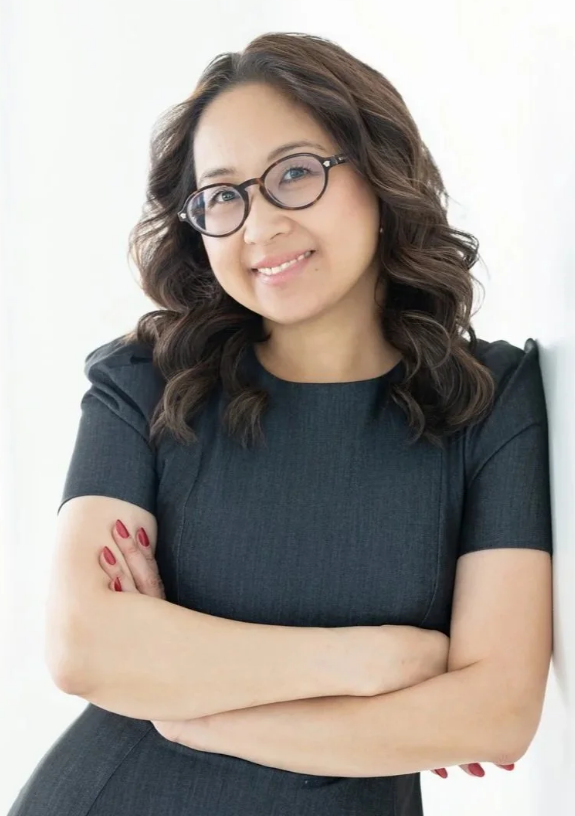
Topic: It’s Not Just Weight: Uncovering the Truth About Lipedema & Lymphedema
Guest Name: Dr. Minnie Cruz-Tolentino
Guest Credentials: MD, FAAFP, DABOM
Discussion Details:
Join double board-certified physician Dr. Minnie Cruz (Family Medicine & Obesity Medicine) as she shares over 20 years of clinical expertise on diagnosing and treating lipedema, lymphedema, hormonal imbalances, and root-cause metabolic health. Featuring the LiLy Collaborative—Loudoun County’s first dedicated physician-led lipedema and lymphatic program—this exclusive series provides a compassionate, expert-led look at real solutions for complex chronic conditions.
Benefits of Watching:
1) Discover Root-Cause Solutions: Learn why traditional diet and exercise often fail for conditions like lipedema and lymphedema and how targeted, personalized care creates lasting relief.
2) Recognize Early Warning Signs: Gain actionable insights on early symptoms you shouldn’t ignore to prevent disease progression.
3) Empower Your Health Today: Walk away with immediate, practical steps you can take to prioritize your wellness before your first appointment.
Address of Guests’ Business:
Suite 119
Leesburg, VA 20175
Hi, I’m Viraj Chang, and I’m the owner and physical therapist at Accelerate Physical Therapy. This is my professional spotlight series. And today I am featuring Dr. Minnie Cruz-Tolentino.
Hi, Dr. Minnie Cruz.
Hi. Thank you for having me.
Do you prefer Dr. Minnie Cruz, Dr. Cruz, or Dr. Cruz-Tolentino?
Dr. Cruz is fine. Dr. Cruz. Okay.
Yeah, sounds good. So, Dr. Cruz, can you just give us a quick introduction about you and your practice? Okay, so my name is Dr. Cruz. That’s what everybody calls me.
I am the owner and founder of My Wellness Physicians. We’re located at the Village of Leesburg here, by Wegmans in Leesburg. And so I’m a family medicine and obesity medicine dual board-certified physician.
I’ve been practicing for about a good 20 years. In obesity medicine, I would say in the last five years. I also do hormone replacement therapy, so menopause hormone therapy.
And over the last, I would say two and a half years really do a lot of lipedema assessment management, diagnosis and management. Okay, so what actually drew you to your specialty? So, you know, I really love academia; I thought I was going to go into the academia track. Yeah, I love the connection with patients in family medicine, primary care, it’s, I really like that, not really much for surgery.
But obviously, family and all, I grew my family, and we moved from New York to Virginia. I also have a background; I’ve been an urgent care physician for 10 years. And COVID really was the one the pivotal moment that drew me to kind of be your way, okay, I need to do something else.
I, like everybody else, had gained a lot of weight. During COVID, it was a very stressful time. And I take my health; I take it in the backseat.
And typically, I was in my mid-40s at that time. So hormones are playing a role now. And mid 40s, I said, I can do this; I’ll lose weight.
I did it before I have a strong family history of heart disease, I have prediabetes. I mean, I’m very open with my patients about my own medical issues. And lo and behold, after six months, I only lost five pounds, like the same story that my patients tell me I kind of went through.
So I said, Okay, I can’t do this. So I went to a colleague and said, ” You need to help me. So I tried it; it’s not working.
And I feel like it’s been so long that I haven’t taken care of my health, that I need to do something. So, you know, help me with medications and stuff. And I saw what she was doing.
I said, Well, I can do something like this. You know, she was in Georgia. And so that’s how my wellness physician was born.
It was my COVID baby. And, you know, primal, I said, if I’m going to do this, if I’m going to do weight loss, I want to do it like the way weight loss, like metabolic health, etc, preventive care. So I went back and got my obesity medicine certification, got board certified.
And I just don’t do weight loss, per se; you know, you get an hour visit with me in the beginning, we really talk about your health and goals down the road, and really, the sustainability of weight loss. Now, over the last, I would say, two and a half years and meeting a lot of clinicians in our area, I found there are certain set of population in my clinic, like, okay, I’m like throwing darts here, you know, like throwing the medications, the registered dietitian, all the tips and tricks. But why are they not losing weight, you know, so it’s as frustrating to me as for my patients as well, like what’s going on.
So you know, you think outside the box, okay, there’s got to be something else going on. And I met providers, clinicians in the area, you know, Dr. Francois, she’s with the Center for Brain Restoration, Dr. Grace Villiver, she’s a lymphatic care specialist, kind of put our heads together. And, you know, hey, lipedema, you know, and that’s kind of how, over the last, I would say, two years, the clinic has evolved into seeing patients with lipedema.
So we have patients coming from all over to get assessment, diagnosis, validation; sometimes it’s just that they don’t, you know, they don’t need me to take care of them. But that validation, like, is this really what I have? So that’s how it’s kind of evolved. And so yeah, that’s the that’s kind of the gist of what the clinic is about.
Now, I do have many services. But primarily, it is like a metabolic clinic; we do a lot of lipedema assessment, obesity medicine, and hormones, and it’s really integrating everything. So yeah, I can tell that’s a very integrative approach.
It doesn’t seem like it’s a kind of a quick fix. It definitely needs no, it’s definitely not. No.
Yeah. So what are so for the people who are experiencing maybe some of these symptoms of lipedema and lymphedema, what are some early warning signs that someone shouldn’t ignore or signs that will warrant a visit with you? Yeah, so lipedema is a connective tissue disease. And it’s actually it’s there’s genetics to it.
So a family member has it as well. It is there’s no blood work or imaging study that would say that’s what you have. It’s all clinical diagnosis and presentation; definitely, physical examination plays a big role in terms of diagnosing somebody with lipedema.
And some say it is hormone-driven. So I talked about the hormonal shifts, you know, puberty, sometimes birth control usage, pregnancies, perimenopause, menopause. So I see a lot of that in that latter stage, the hormone shift of perimenopause and menopause, where they have that underlying lipedema, and it gets triggered or flared during those hormonal shifts.
And the symptoms can be like, it’s fat that’s resistant to diet and exercise. You have patients that are on GLP ones have lost some of that weight, the excess calorie weight. But definitely, you know, they’ve plateaued, or it’s like they’re doing what they’re supposed to be doing.
But why am I not losing weight? Easy bruising is a kind of one of the symptoms as well. What else? Pain- so heaviness and pain is different for a lot of folks, it doesn’t have to be exactly pain, it could be the description could be pressure, heaviness, someone touching you like I would have the history would be, if I get a massage, I don’t like it when they massage my mind, it feels heavy, it’s uncomfortable. Those are the descriptions that I would get from patients.
And definitely, like swelling at the end of the day, you know, a lot of lipedema patients have that chronic inflammation. So you have symptoms like bloating, dizziness, brain fog; it is a very broad symptomatology that overlaps with many conditions. But you see this chronic inflammation that’s happening all the time.
So and all and obviously, you know, the big thing is that it is confused with obesity or lymphedema, but it isn’t; pain is pretty much a big hallmark of it, I would say, you know. So now, if someone had some of these symptoms and they scheduled a consultation with you, what would be maybe a treatment? Everything’s individualized, but how would and how would a multidisciplinary approach work? What would that look like for them? Like, who would they be working with? Yes, so that’s a great question. So first, you know, you have to get a very thorough history.
I mean, we start by asking you questions about your childhood, and then when these hormonal shifts and chronic stress, what triggered it, because that helps to where you are in your chapter of life helps as well. And then really ruling out other conditions that could be contributing to that inflammation, because you can have your lymphedema under control, but have so many other conditions that can be contributing to that fire, then you know, it’s not helping at all, and you still don’t feel good. You would be working with- I refer out to patients to a lymphatic specialist, a vein specialist.
And if you have other comorbidities, right, so if you’re thinking of, they have an endocrinology issue, a lot of lymphedema patients have concomitant autoimmune disorders. So rheumatology, MCAS is a big thing too. So immunology.
So again, it’s a multidisciplinary approach of trying to figure out what you have and what you don’t have, so that, you know, you can be under control. Now, my part is the medical management part. Some patients that come to me for consultation don’t realize there’s also surgical management.
So we talked about that briefly. And we do have several, and I do encourage patients because what you don’t know, you don’t know. And I’m not a surgeon.
So I always tell patients, there’s also surgical management. And it’s a certain procedure, technique- a liposuction, perhaps for someone who has lymphedema; it’s a very, you know, it’s a different technique. It’s not just a regular liposuction, I guess.
So definitely, I would refer out to tell them, get at least two surgical consultations, two or three, you know, vet your surgeons, ask as many questions as possible, and see what they have to say in terms of where you’re at in your stage or whatnot, or your journey for lymphedema. Yeah, it’s really a lot of it is what we talk about is functionality. And you know that your physical therapist, so you know, it’s the quality of life.
The first thing I always tell patients is we are living longer and longer. So how do you want to get there? And this is across all my patients: how you want to get there, when I get there walking, running, and or in a wheelchair, right.
So we all I look at everything and really optimize not just what their health is, but prevention down the road. So it’s the same in lymphedema too; if you’re a stage one, then you know, hopefully, like we try to keep you at stage one. That’s the goal.
So that kind of leads me to my next question. But what can happen when a patient’s way too long to seek care? Like, is this a progressive disease? Or is this kind of like, can you be can you hang out on one stage and stay there for a few years? Or is it pretty much you’re going to be, you know, your trajectory is going towards stage one, stage two? Yeah, I mean, everybody is different. But that’s, yeah, that’s a great question.
Like, definitely, with the hormone shifts, you could certainly progress. And I see that a lot. I see a lot of patients that you could I would say I call it like it was sleeping.
They’ve been good. And patients that are great with diet and exercise, and all of a sudden hit perimenopause, and it just flares. Obviously, it’s devastating for them, you know, all of a sudden, they have this body condition.
And it’s really the pain. A lot of the pain. They’re very achy and painful and tired all the time, you know, and more so than before.
And it’s not just the hormonal shifts, but also stress. So mental stress, surgeries, I’ve felt that sometimes and I mean, it’s not in literature, but I feel like a surgery causes you to have stress in your body. And exactly.
Hormones, you know, hormones are very mainstream right now. If you have lipedema, and you have a provider who’s not well-versed with your condition, they may perhaps put you in a flare because they may give you too much or too little, etc., things like that. So you have to kind of look at it in that regard.
Yes, it can be progressive. Even if you have surgery, I was just talking to one of the surgeons- if you have surgery, liposuction, you’re taking out the fibrosis, you still have lipedema. Right.
And you still have to do all your compression, wear compression stockings, you still have to use your pneumatic pumps, you still have to eat healthy, you know, you still have to exercise, you have to do all that stuff. The surgery is not a cure-all. It’s not, it’s not going to, like, take it away.
So not sure if that answer your question. It’s, it’s hard to say, because it’s really individualized. I’m sorry, individualized, you know, so yeah, yeah, I think that certainly could be certainly be progressive.
Yes, that’s the whole thing. Yeah. I think that that was something interesting that I got from your Lilly collaborative that it’s not I think I do a lot of work in perimenopause with my patients in pelvic floor.
And so there’s a lot of, well, you have these fluctuations in estrogen, progesterone, testosterone, but it’s a gradual descent. And so you want to support yourself with HRT. But then I never thought of, you know, taking HRT.
And if you have this underlying truth, that still is a shift in your hormones. And any, any shift, whether you’re not supporting, or maybe you support too much, can be a trigger. I’ve had, I’ve had several patients that, you know, both of us went left wondering, like, okay, when did it, because that’s what some of my patients would, when did this happen? And why did this happen? Yeah, obviously, you can’t reverse time.
But so I tell them, or even so, if I have my 30-some patients, and they’re not doing HRT yet, it’s part of my recommendations to them that down the road, should you choose to do HRT, perhaps, you know, approach it with caution in the sense that talk with somebody who also knows that you have limpedema. I’m talking about patients with lymphedema here, right? Because those big hormonal shifts can certainly set off some things. And I’ve seen that, you know, with some patients.
And what does that entail? Nutrition. So I always, always start with, you don’t want, I’m sure you do the same thing, you don’t want to overwhelm your patients with 20 things to do. Right.
So I always start with, let’s start with just removing all the processed foods. A couple of weeks later, maybe, you know, looking at your diet, maybe taking out gluten, you have to just find those triggers for you. And then optimization of sleep, I think we underestimate sleep enough.
Remember, the underlying thing there is the chronic inflammation. So if you get adequate sleep, you’re not apt your immune systems rubbed up, you’re not apt to get sick. You know, and you’re really optimizing.
I think sleep is just underrated, we really should get that. And not just with lymphedema, I mean, with everybody, and more so now with in patients with impaired menopause, menopause, right? With sleep disturbances, it’s so much more difficult to get that adequate sleep. Activity, being mobile- I mean, that’s really important. Weight training, just those really basic lifestyle changes itself can really help.
I think that’s helpful. And that probably makes people feel like, Oh, I can take a walk today for 30 minutes. And I’m actually trying, I’m doing something for myself and helping.
So is there a patient success story that stayed with you? That you’d like to share? Oh, gosh, I have a lot. Weight loss, lymphedema. Lymphedema is tough, because it’s an ongoing I manage my patients, but I think the success of that for patients would be just that they’ve had so much pain all the life.
I would have to say it’s the validation, right? That’s finally they’re heard finally, like, okay, I’m not going crazy, there has to be something going on. And finally, I found somebody, okay, she’s listening, and she gets it. You know, I think that’s across the board.
Not just one patient success story, but everybody else’s, you know, that just comes in. I’m not making this up. And it’s probably the same with you, with your perimenopause menopause patients, like, Oh, my gosh, she’s finally listening to me that I’m not, you know, going crazy here.
So, you know, patients lived with pain for so long. They’ve tried everything. And I think it’s just a validation that there’s something biologic, there’s something in me that had maybe causes because I really tried.
And it’s nothing. So I think that’s that in itself is a success that they felt heard, there’s validation, and then now they can actually do something about it. And I think that the blame game, like they’re not blaming themselves anymore.
I think that’s a self success for me for my patients. Yeah, they blame themselves too much. You know, yes.
Yeah. Well, thanks for taking lead in that. So I think that it’s hard.
You have a hard job, but you’re you’re really you’re the primary care, you’re taking lead, I think you’re forming a plan for them, and delegating different treatments. And I think for you to, you know, kind of take the leadership in this role is going to be phenomenal for like this community. I loved your Lily collaborative.
Thank you how much you’re sharing in the community. So I appreciate your time. And thanks so much for bringing more information about lipoedema.
Yeah, actually, can I do a plugin? Yes. So I really am big on health literacy and advocacy for patients. I am big on patient education.
So one of the thing is a passion project, basically. So this November seven, this is our second one. So November seven, from 10 to four on a Saturday, it’s going to be at the buyer at Stockyard Brewery.
It’s a women’s wellness event. So it’s by piece women’s wellness workshop. We have nine clinicians in the Loudoun County area that I’ve nagged over the last six months to make sure they are going to be there and they’re going to be sharing their expertise.
Our topic is hormones, inflammation and burnout. So it’s going to be a great event. We had such great turnout last spring.
This is our fall event to really educate our patients, not just patients, but honestly, the community anybody wants to come bring your spouse, bring your girlfriends. It’s for everybody. Yeah.
I love that. Thank you so much. Thanks for being here.
And thanks for spending.