
Spotlight Series
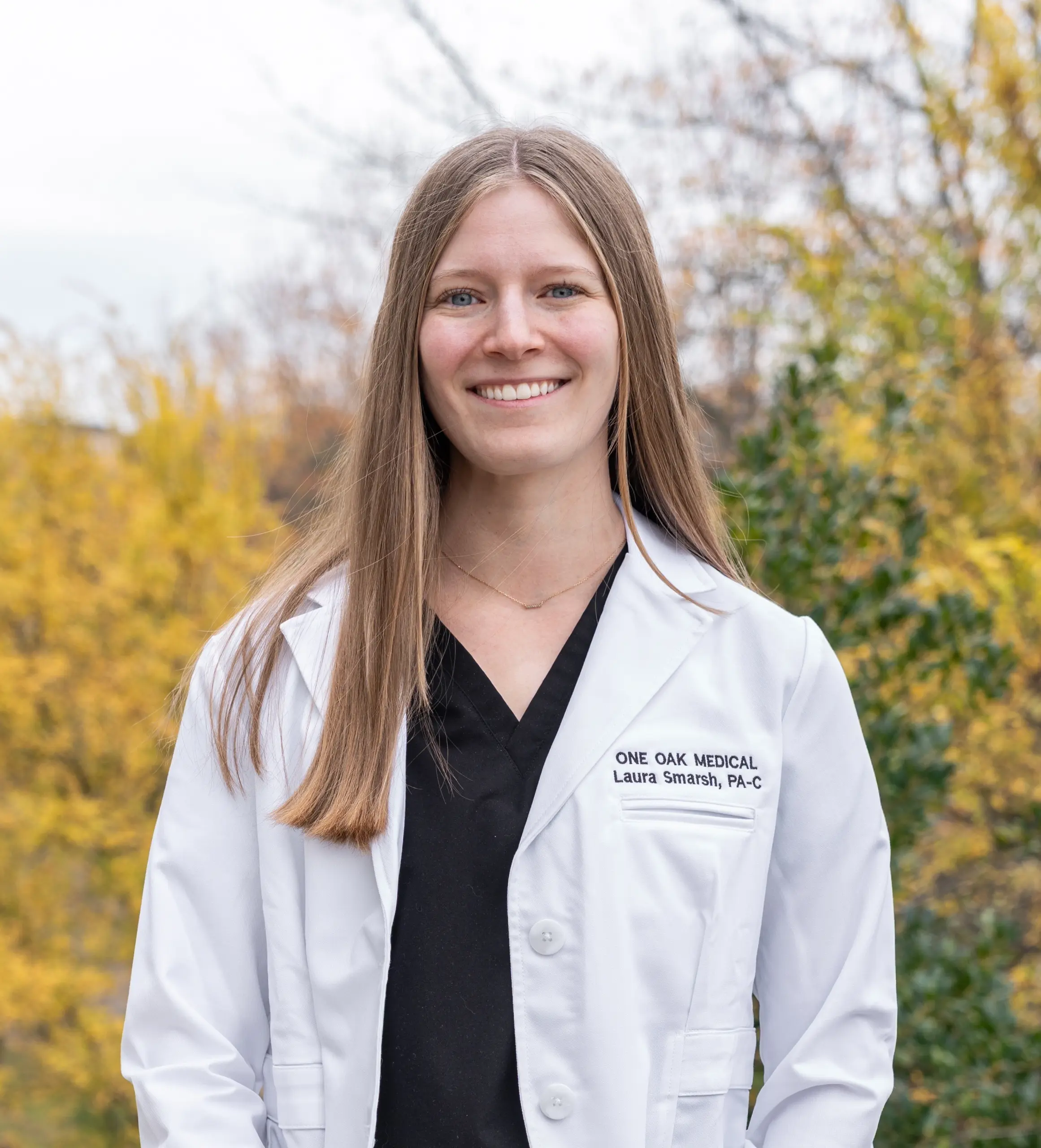
Topic: Bridging Expertise and Empathy in Medicine
Guest Name: Laura Smarsh, PA-C
Guest Credentials: Physician’s Assistant
Discussion Details:
In this spotlight interview, board-certified Physician Assistant Laura Smarsh shares how she transforms the traditional primary care visit into an intimate, stress-free sanctuary built on active listening and deep empathy. As a dedicated provider in internal medicine and women’s health, she is uniquely equipped to address complex concerns like perimenopause and menopause right from the very first visit. Tune in to discover how Laura creates a collaborative, comforting environment where patients feel truly heard, at ease, and empowered to take control of their wellness goals.
Benefits of Watching:
Why You Need to Watch: What’s Waiting for You
A Clinic Visit That Feels Like a Sanctuary: Discover how primary care is being reimagined as an intimate, stress-free space where your anxiety resets the moment you walk through the door.
The Power of a Provider Who Truly Listens: Learn what happens when a clinician trades standard medical rushing for an open ear, making sure you are fully heard before a single recommendation is made.
Immediate Answers for Menopause & Perimenopause: Find out how Laura’s specialized internal medicine expertise allows her to tackle complex women’s health issues head-on during your very first visit.
Ditch the “White Coat” Stress: Experience a refreshing, empathetic approach to healthcare built on a collaborative partnership, where your voice matters just as much as the clinical data.
The Big Takeaway: Healthcare shouldn’t feel rushed or intimidating. Tune in to see how medical expertise and a deeply sympathetic ear come together to create the supportive care you actually deserve.
Address of Guests’ Business:
24560 Southpoint Dr
Suite 320 Aldie, VA 20105
Hi, I’m Viraj. I’m a physical therapist and owner at Accelerate Physical Therapy, and this is my “Professional Spotlight” series. Today, I am spotlighting Laura Smarsh, physician’s assistant at One Oak Medical. Welcome, Laura.
Thank you. Thank you so much for interviewing me. It’s so exciting.
Yay. So excited to have you here. So just a little bit about Laura. Laura is an accomplished physician’s assistant and a trusted advocate in achieving optimal health. She’s board certified and passionate about patient-centered care and brings both clinical expertise and heartfelt dedication to every patient interaction, with specialized focus on preventative medicine and women’s health. She’s a distinguished healthcare professional with her bachelor’s degree from Duquesne University in Pittsburgh and a master in science in physician assistant studies from Shenandoah University. Laura has built her practice on improving patients’ overall quality of life through thoughtful education and individualized care plans. Her commitment to evidence-based medicine and shared decision ensures that the best healthcare outcomes arise from collaborative partnerships between patients and providers. I love that.
Well, welcome. So talk to me a little bit about what initially drew you to becoming a physician’s assistant and just your specialty right now.
Yeah. So growing up, I knew I wanted to work in medicine in some capacity. Have a lot of healthcare providers in the family, mostly nurses. But I think I always knew I couldn’t do nursing. I was like, “I’m not cut out for that. They’re in a different league.”
Mm-hmm.
So then I started kind of navigating and exploring other options within the field of healthcare, kind of just doing my own research, and stumbled upon the physician assistant career path. Hadn’t heard of it ever.
Mm-hmm.
Did more research, ended up doing some virtual shadowing hours, and then realized that, yeah, this is a pretty amazing career path. I liked the idea of doing a shortened amount of school because you go through high school, and you go undergrad, and you’re like, “Oh my gosh, I don’t know if I can do more school than this.”
Yeah.
And so it was typically two years, 24 months average for PA school, and then you’re done. You’re out in the world. You’re working. You’re practicing. And there’s so much flexibility with the career in terms of lateral mobility and switching specialties if you want to, not having to go back to school for that, so it was all very appealing. Yeah, and it’s been such an amazing career path. I’ve found so much joy in it, and I feel like that’s just where my passion lies. Luckily, I found that in my life.
Yeah. Yeah.
And then when it comes to just primary care, family medicine, landing in that in general-
Mm-hmm
… going through school, going through rotations, it’s kind of hard to find out– It’s tricky to find out what you like because you can find things you like in each specialty.
Mm-hmm.
But primary care specifically, or I guess family medicine, what drew me most to it was, one, the continuity of care with patients. My favorite thing was seeing patients again, being like, “Oh,” catching up with them. “How’s life? How’s your family? How are you doing?” And just building that rapport with patients, building that relationship. I love getting to know my patients as if they’re friends almost.
Mm-hmm.
And then also, I like the wide variety of different things we see in primary care. There’s never a shortage of new things to learn and see and constantly learn new things every day, which is fun for me. It kind of challenges my brain and just expands my knowledge base even more. So that’s the biggest reasons why I decided to choose this specialty.
I love that. That’s one of the main things that I like about me being a physical therapist is that you get to see the patient and just see the progress-
Yes
… continuously, and that is just so rewarding for the patient, and then it’s very rewarding for you. So I’m sure you feel that same feeling as you’re kind of growing with them and supporting them through different phases of their life. So that’s amazing.
Yes, 100%.
Yeah.
It’s the best feeling to see the progress and to celebrate together with the patient, and they’re happy, I’m happy, and it’s this wonderful collaboration between us to know that they’re feeling better and being the healthiest version of themselves they can be.
Oh, I love that. I love that. Talk to me a little bit about what core values shape your approach to your patient care.
Yeah. So I think my basis for patient care is, of course, empathy and understanding, but also making sure there’s collaboration involved in that. I actually had a rotation in school that was with a nonprofit clinic, and that really opened my eyes to how important it is to meet the patient where they’re at, metaphorically in the sense that not everyone can follow all these set guidelines we have in place of how to be the healthiest version of yourself, and you have to eat this and do this and exercise this much, and it’s not always attainable and feasible for a lot of different people. And so a lot of my core care values comes from telling the patient, “Hey, I see you. I understand that you have responsibilities. You can’t focus on your health 24/7. Sometimes you’re on the back burner.” So it’s important to kind of work around their life and find little holes in their life that you can optimize their diet, optimize their exercise, try and get them to get the follow-up appointments, working with pharmacists to find affordable medication for them. So I guess just making sure that patients understand that they don’t have to change their whole entire life in one day. Just working with me to find sustainable and attainable ways to be healthier, and ways that they can just feel good about it too, without having to break the bank or push away all their responsibilities.
Yeah. And I’m sure that they feel a little bit less… I guess that’s a little bit more control for them, too. It’s like, okay, this is what I can accomplish at this time, and I am getting it accomplished, and that’s very gratifying for them. And whenever they can kind of tackle problems as they go along. And it seems very individualized, too. It’s not like a generic plan that you have for everyone. It’s very different for everyone because they’re at different places.
Yeah.
It’s very different to find… Yeah. It’s very nuanced, and I think that’s one thing I like too, is that it’s not all cookie cutter, same for each person. You have to work with each patient and find out what they can do. There’s so many different social determinants of health that you really need to take into account with each patient and kind of just work with them to figure out, where can we find improvements and make adjustments in your life to just get you to a better place with your health?
Mm-hmm.
So with that being said, what kind of patients tend to thrive in your care? I’m sure that everyone’s kind of thriving- … in a different level. But is there certain specific patients that are attracted to your specialty, or different… I guess just anyone that kind of tends to gravitate towards you?
Yeah. I feel like patients are always so nice, and something I’ve heard often is patients who have struggled in the past with finding healthcare providers to really just sit down and hear them out and listen to what they are saying.
Yeah.
In the world of healthcare it’s so fast-paced, we’re constantly having to see more patients in less amount of time, and it’s hard to find a provider. Not the provider’s fault. Sometimes there’s other factors. But it’s hard to find someone where you truly feel heard and that your concerns are being validated. And again, patients are so nice, and that’s something that they’ve mentioned to me, is that I really, really strive to sit down, shut up, and listen to what they have to say, because sometimes people just need to get it off their chest and say, “Hey, I’ve really been struggling with this. I just need someone to hear me and believe me, and do something to try and help me figure it out.” Sometimes it’s not always about finding the diagnosis that day or figuring out exactly what’s going on, figuring out a treatment. It’s more so just making sure the patient feels validated in what they’ve been going through. And I feel like I take a lot of pride in being able to provide that for my patients. So I hope that those kinds of patients who have been through that in the past and struggled to find someone who feels like they truly care about them, I hope those are the kind of patients I can attract as moving forward in my practice as well.
Yeah, I think so too. I think to have that time and that ability to kind of talk to someone and care for them in that way, it’s very rare. And so I appreciate that for sure. What kind of services do you provide which can support a more proactive approach to health and wellness?
One thing is just I’m a huge advocate for preventative medicine, making sure people are up to date with their preventative care. That’s something I always incorporate almost into every visit that I have for a patient, whether it’s a physical or not, is just, “Hey, you update your mammogram? You got a colonoscopy done? Let’s talk about when we can get that done, and let’s work together to kind of figure out the best option for you.”
Mm-hmm.
So that’s always number one of being proactive with people’s health, is kind of taking that next step to get the preventative screenings done.
Mm-hmm.
And including in that, I also provide women’s health services, women’s health exams, Pap smears. So that’s something that I try to put… It’s a great way to incorporate that into family medicine-
Yeah
… just so they’re not having to go to multiple different providers.
Yeah. No, that’s great.
They can get all of that done together, which is pretty convenient when you think about it-
Yeah
… not having to make multiple different appointments with different people.
Yes.
And then honestly, a few other just women’s health things as well. Hormone replacement therapy is a big thing right now, and we incorporate that into our practice, so patients-
Mm
… or women not having to just suffer with that and kind of be proactive and like, “Hey, I’m starting to see symptoms like this. What can be done?”
Mm-hmm.
Well, we can certainly help with that. And I’m glad that’s starting to be more… It’s gaining more traction now. Starting to become more accepted. So those are all things that I’ve been trying to push a lot more in my practice so patients are aware that preventative screening can certainly save lives. And that also we can get treatments done for things that people don’t have to just suffer through, especially-
Mm-hmm
… for women, because I feel like historically women are kind of put on the back burner when it comes to healthcare and receiving proactive services for their health.
Yes. That’s a big topic in my clinic right now with women’s health and perimenopause and menopause and HRT and hormones. It’s great that you are able to have those conversations as a physician’s assistant, or as a family practice place where they can have those conversations-
Mm-hmm
… versus sometimes they don’t get these conversations until they see a specialist. So to have that conversation with family medicine is, I think, really important because it gets the ball rolling, gets them understanding things, and the more they’re educated, the more they’re going to start to take advantage of these things. So love hearing-
Yes
… I know a lot of people are going to love hearing that.
So talk to me a little bit about how your care complements physical therapy or other providers in a multidisciplinary approach.
Yeah, of course. I feel like in family medicine, primary care in general, where most of our job is kind of coordination of care, working with other members of the multidisciplinary team, because most of what we do is we see the patient, and we’re kind of the first point of contact a lot of times when it comes to these different patient concerns. And we do what we can in primary care, but sometimes that requires seeing a specialist, seeing someone else to help either with a diagnosis or management of a problem. And so, most of our job is if we can’t figure it out from a primary care, our resources from a primary care standpoint, we’re referring out to other people who can help with that. And a lot of that does involve physical therapy people. A lot of the diagnoses we see include different aches and pains and musculoskeletal concerns. And so best believe I am constantly referring people to physical therapy because I like to include that more holistic approach instead of just, “Oh, take some medicine, you’ll be fine.” Physical people, I feel like that’s a lot of symptom management, but also getting that long-term relief and treatment for their conditions through physical therapy, through seeing different specialists to try and get that multiple different eyes on a situation, and getting the specialist care as well, and then having me coordinate that and be the hub of all of that. So, I’d say just physical therapy, other providers, we’re all on this team together, and I’m just kind of the conductor almost.
So for a first-time patient, what should you expect at your first visit?
Oh, okay. Well, when you walk in, expect a very warm welcome from the staff. We have an amazing support staff-
Yeah
… front desk, MAs, office manager, just amazing. Expect a fun environment. The energy here is up, it’s fun. It does not seem like your typical doctor’s office. It’s not cold or sterile. It’s very much good music, good energy. And then, what I would hope from a patient coming to see me for a first-time visit is just a comfortable, productive conversation, highlighting what their concerns are, and coming up with a collaborative plan that addresses what we can do to help get them to find an answer, or help them to find some treatment or management for their problem. Always highlighting that collaborative sense in it. I never want patients to feel like I’m speaking to them. I want it to feel more like a flowing conversation and what works best for both of us, what makes us both happy. That’s always my main goal at the end of the day, is making sure everything I do is patient-centered because they know their body best. They’ve been in it forever.
Mm-hmm.
And so just using my medical expertise and their knowledge of what they’re experiencing to kind of come up with the best game plan that’s going to lead to the best results and make us both feel comfortable.
I love that. That makes me want to come and see you.
Anytime. Come on in.
I know. I was there actually. I walked in, and I was greeted by your admin staff, and it is true, they’re very vibrant, very excited, and very helpful. So I love the vibe. I also love that beautiful green color when you walk into-
Yes
… the office. Yeah.
Yeah. I feel like it’s calming. I feel like-
It is
… you’re going to the doctor, it’s never an exciting time. You’re going to go talk to a stranger about vulnerable things.
Yeah.
You need some nice colors, good music, just to try and calm down the nerves a bit.
Yes. I love that. I love that. Well, thank you so much. It seems like you guys have such a holistic approach, a whole body approach. You’re getting to know the person, really know the person from the inside out, and getting to the root cause of the issues, and doing the best that you can to help them through, not just this phase, but it seems like all stages of their life. So thank you so much, Laura, for being on my podcast.
Yeah. Thank you so much. I appreciate it, and great getting to talk to you.
All right. Bye bye.